Two-Thirds of Florida Latinos Say Country Is Going Wrong, Poll Shows
Younger voters in Miami-Dade District 27 cite housing costs and family pressure as they break from the Republican Party, while older Cuban-Americans remain loyal.
By Neha Delgado ·

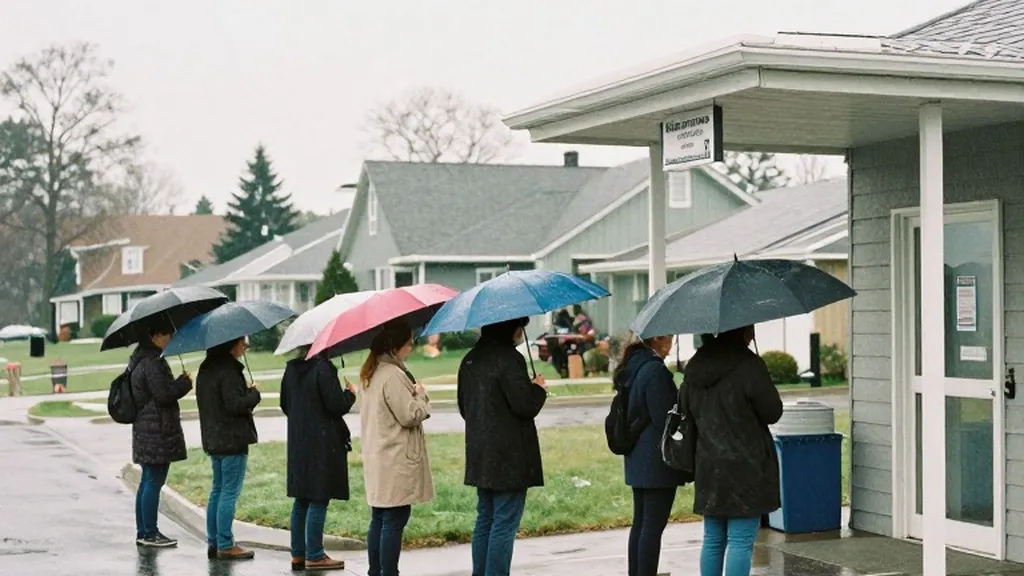
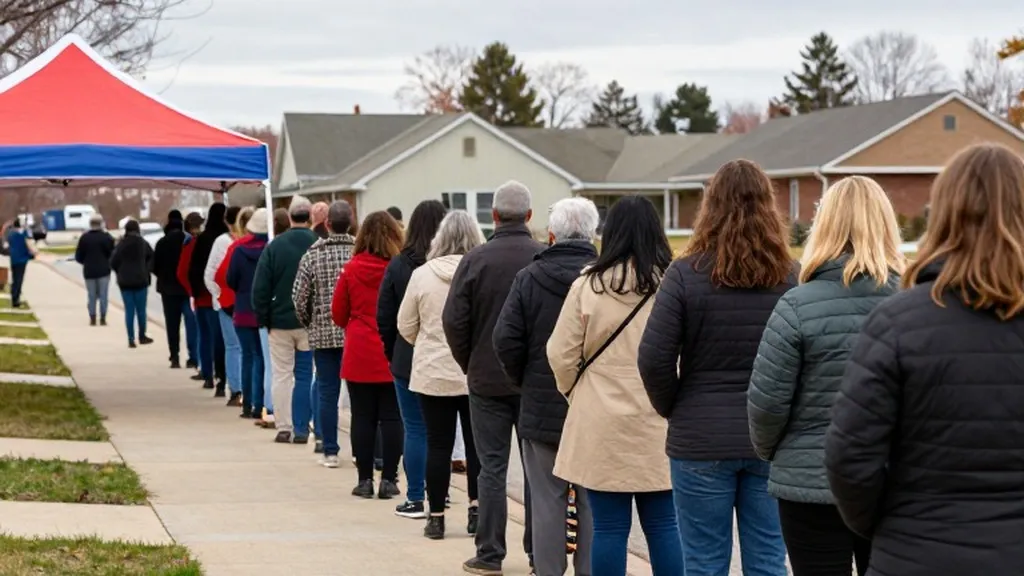
A shift among Latino voters in Florida is reshaping the competitive landscape for Congressional District 27, where three-term Republican representative María Elvira Salazar faces Democratic challenger Eliott Rodriguez. Both candidates are Cuban-Americans and former television news journalists. Recent polling from Florida International University indicates that two-thirds of Florida Latinos believe the nation is heading in the wrong direction, a sentiment that was visible at the Palmetto Bay voting site on Election Day.
The defection appears most pronounced among younger voters. Miranda, a Cuban-American paralegal who requested that her surname not be used, described the current climate as unique. She stated that this cycle is the first time she has seen Latino voters so anxious and divided, particularly regarding the affordability of living costs. Miranda noted that while a tide seems to be turning against President Donald Trump, the outcome remains uncertain for those struggling with financial hurdles.
Housing costs were a central concern for young voters. Miranda, who is attempting to purchase her first home, explained that making that goal achievable has become difficult for many in the Latino community. She observed that voters are no longer casting ballots in unison as they typically have in past cycles. The pressure to buy property has become a defining factor in how younger members of the community view their political options this year.
Valentina, a recent Colombian-American college graduate in Palmetto Bay, also withheld her last name. She reported that younger Latinos are breaking away from their parents and families to make independent choices. She said this generation feels let down and betrayed by the current administration. Rather than relying on the opinions of other family members, these voters are conducting their own research to ensure their voices are heard.
Not all Cuban-Americans share that view. Oscar Sosa, a Cuban-American resident, argued that recent polling has misjudged the loyalty of the community. He contended that the community will continue to support the Republican Party in South Florida. Sosa criticized discussions about specific racial and ethnic voting blocks as a strategy to divide the country rather than determine what is best for America. He asserted that Latinos are fully aligned with the Republican Party.
Teresita Alvarez, an 82-year-old Cuban-American who arrived in the United States in 1966, agreed with Sosa. Speaking in Spanish, she acknowledged that many Cuban and Latino voters are currently confused and divided. However, she maintained her long-standing preference for the Republican Party. She stated that she will vote with her Republican president because the process is much simpler for her.
The race in District 27 serves as a microcosm for the changing dynamics within the state's Latino electorate. The divergence between older, established voters and younger, first-time home buyers creates a complex voting pattern. The results will determine which candidate advances in a district where both parties are targeting the same demographic groups.
Source: WUSF Public Media