ICE Raids Cloud Final Hours in Tight California House Race
Federal enforcement actions in the Central Valley have intensified local tensions ahead of the November 3 midterm vote.
By Karan Meyer ·
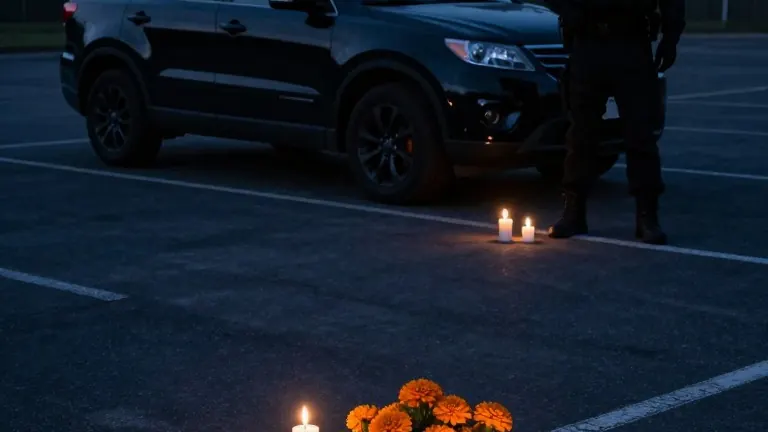
Federal immigration raids are dominating the final hours of the contest for California's 22nd congressional district as the midterm election approaches. The conflict centers on Operation Save California, a 45-day initiative launched by the Trump administration in early October that has seen masked agents in unmarked vehicles deploy across the Central Valley. This surge in enforcement activity has become a central issue for voters in a region where agricultural labor is essential to the local economy.
The race pits Republican incumbent David Valadao against progressive challenger Randy Villegas. Valadao, who has won six of his last seven elections, is seeking a seventh term. Villegas is leveraging local frustration over rising costs of living, healthcare cuts, and the recent wave of detentions. Polling data indicates a tight race, even after a 2025 redistricting measure created maps intended to favor Democrats. The district includes Kern County, where President Donald Trump carried the area by nearly 20 points in 2024, despite losing the state overall.
Support for Villegas has drawn national attention, with figures such as Senator Bernie Sanders and Representative Alexandria Ocasio-Cortez visiting the region to rally volunteers. Labor unions, including the United Farm Workers (UFW), have mobilized members to knock on doors. In Bakersfield, volunteers chanted the slogan "si, se puede" in a room near a memorial for Dolores Huerta, the late labor organizer who helped found the UFW. Senators Adam Schiff and Alex Padilla also joined the final day of campaigning.
Villegas cites direct economic impacts from the raids. He noted that local business owners are struggling and have pivoted to services like grocery delivery because residents are afraid to leave their homes. "It's having an impact on people who just want to go to work, want to go to school," Villegas said. He also pointed to Valadao's vote for a bill that would make ICE the most well-funded law enforcement agency in the country. Valadao defended the operations in a debate, stating that many targets have criminal backgrounds and that "it is what it is."
The Department of Homeland Security rejected claims of racial profiling, stating in an email that targeting is based on illegal status, not skin color or ethnicity. However, Teresa Romero, president of the UFW, disputed this in a statement, describing a dragnet approach. "These are not criminals. These are hard-working, long-term members of our communities being unlawfully targeted simply for looking Latino and working class," Romero said. She reported instances of car windows being smashed and workers being dragged from vehicles.
Local officials describe a community on edge. Olivia Calderon, the mayor of Arvin, said pastors have asked if ICE takes Sundays off because residents fear attending church. A woman in Fresno County, speaking on condition of anonymity, said her husband was detained while returning from work in October. Her four U.S. citizen children have become anxious, crying when they hear a knock on the door. Priscilla Ortega, a 23-year-old warehouse worker in Lamont, cited rising fuel costs from the war on Iran as an added financial burden. "People are sick of the prices increasing," she said.
Source: Al Jazeera