Eisenkot challenges Netanyahu in tight Israeli vote
Polls show a narrow race where 68% of Jewish voters say the 2023 attacks are the deciding factor in their ballot choice.
By Chloe Phillips ·
1,200 people died in the Hamas-led attacks of October 7, 2023, a number that now anchors the campaign for Israel's next prime minister. The toll of that day, combined with the subsequent wars in Gaza and the region, has created a high-stakes environment for Tuesday's vote. Polling data indicates a tight contest between incumbent Benjamin Netanyahu and his chief challenger, former military chief of staff Gadi Eisenkot. The election is widely viewed as a referendum on Netanyahu, who holds the record for the longest tenure in the country's history.
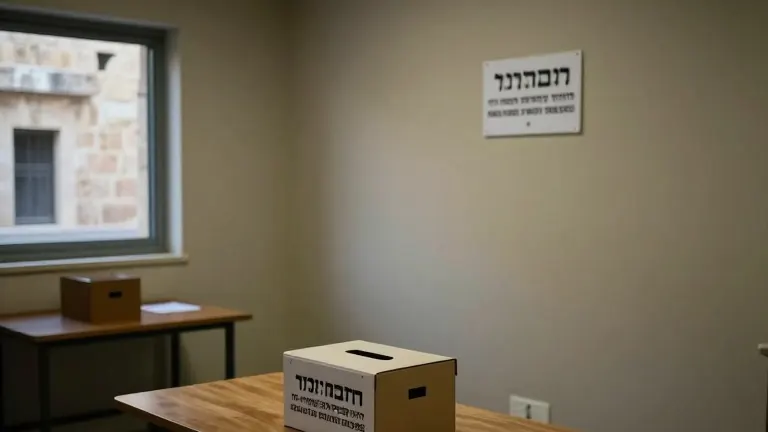
The voting mechanism in Israel does not select a leader directly. Citizens cast ballots for political parties, which then negotiate alliances to form a majority coalition in the Knesset. No single party has ever secured a majority of seats on its own. Consequently, the days following the close of polls will involve intense bargaining among both large and small parties to assemble a governing body and name a new head of government. This process often takes weeks or even months to conclude.
A Jerusalem think tank, the Israel Democracy Institute, reports that 68% of Jewish Israelis identify their views on the October 7 attacks as a central factor in their voting decision. The security failures of that date dominated the public discourse more than the humanitarian crisis in Gaza. Netanyahu has maintained a hawkish stance on all fronts, including Iran, while resisting calls for a formal commission of inquiry into the events of that day.
Eisenkot, who lost his son and two nephews in combat in Gaza, is attacking Netanyahu's record. He criticizes the prime minister's role in the security breakdown and his efforts to exempt ultra-Orthodox Jews from military service. That policy has drawn public anger during a period of protracted conflict. According to the same poll, approximately 25% of Jewish voters ranked mandatory military service as a key consideration in their party selection.
Netanyahu, 77, leads the Likud, the largest party in the Knesset. His political legacy is directly at stake in this election. Eisenkot, 66, leads the centrist Yashar party after entering politics in 2022 following a four-decade military career. Other major contenders include Naftali Bennett, 54, who is running on a joint ticket with Yair Lapid. Bennett served as prime minister and previously worked as an aide to Netanyahu.
Itamar Ben-Gvir, 50, leads a far-right ultranationalist party and currently serves as the national security minister. Yair Golan, 64, heads the Democrats, a center-left group that supports the establishment of a Palestinian state. Over 30 parties are competing, though only about a dozen are expected to win enough seats to enter parliament. The campaign has focused less on the international image of the state and more on domestic security and military obligation.
The international context adds pressure to the outcome. President Donald Trump endorsed Netanyahu last week, providing a political boost to the incumbent. The U.S. midterm election is scheduled for next week, making Israel's wartime conduct a prominent topic in American campaigns. A long-standing alliance between the two nations has been tested by the unresolved war with Iran, which both countries launched together on February 28.
Regional talks continue as many in Iran watch for signs of a return to all-out war. Israel's standing has dropped in much of the world due to the Gaza war. An international arrest warrant is currently in effect against Netanyahu. Rights groups and United Nations officials have accused Israel of committing genocide, a charge the country denies. The next government will inherit these diplomatic challenges alongside the task of forming a stable coalition.
The candidate Mansour Abbas, who leads the Arab-led Ra'am party, is not focusing on the broader Israeli-Palestinian conflict. His campaign centers on crime in Arab communities. He has appointed a mainstream Jewish politician as his deputy to position himself as a viable partner for the next coalition. The result of Tuesday's vote will determine which of these figures leads the effort to rebuild a government.
Source: Philadelphia Daily News