Israelis vote for parties in election that could end Netanyahu's coalition
The Knesset's 120 seats are determined by national party lists, with no single party guaranteed a majority.
By Neha Delgado ·
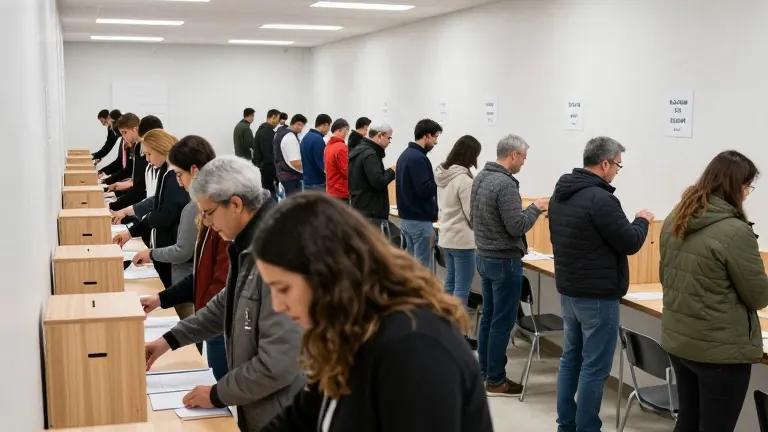
Israeli voters cast ballots this week to reshape the 120-member Knesset.
The election takes place under intense international scrutiny following the attacks of October 7, 2023, and the subsequent war in Gaza.
The outcome will determine whether Prime Minister Benjamin Netanyahu retains his position as the longest-serving head of government in the country's history.
The Israeli electoral system differs fundamentally from the American model of geographic representation.
Voters rank political parties rather than individual candidates, and seats are allocated based on the proportion of the national vote each party receives.
A party must secure at least 3.25% of the total vote to win a single seat in the Knesset.
This proportional method means that no party in Israeli history has won an outright majority of the 120 seats.
Consequently, the formation of a government depends on negotiations between multiple parties to build a governing coalition.
The President of Israel, a largely symbolic figure, tasks a Knesset member, usually the leader of the largest party, with assembling this coalition.
If that individual fails to form a government within the allotted time, the President assigns the task to another member, potentially triggering new elections if the process fails again.
Coalition talks often involve trade-offs, where larger parties adopt policy priorities of smaller partners in exchange for their support.
Benjamin Netanyahu faces a challenging path to power amid domestic pressure from corruption charges and security questions related to the October 7 attacks.', "Polling data from i24NEWS and Direct Polls projects his coalition winning 59 seats, which is one seat short of the 61 required for a majority.", "The opposition field includes several figures who align with the center or right rather than the left.", "Former military chief Gadi Eisenkot, former Prime Minister Naftali Bennett, and former Defense Minister Avigdor Lieberman lead parties that appeal to center-right voters.", "On the left, former general Yair Golan leads a new group called The Democrats, which functions as a coalition of remaining leftist factions.', "The election process extends beyond the day of voting and includes the subsequent period of dealmaking and coalition building.', "A final government will not be established until a single prime minister is chosen and successfully assembles the necessary support in the Knesset.
Source: The Jewish Exponent