Vetri's 1998 Opening Reshapes Philly Dining
The restaurant owner's introduction of Northern Italian techniques ended the city's dominance of red-sauce cooking and spawned a new culinary generation.
By Chloe Phillips ·
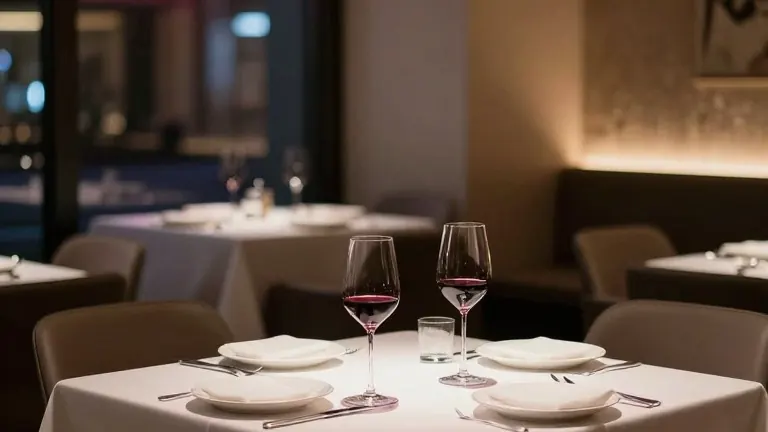
In 1998, four tables filled Marc Vetri's first Philadelphia restaurant.
Vetri stepped outside to Spruce Street, where every neighboring dining room was full. Those establishments served eggplant parmesan and meatballs, dishes Vetri omitted from his menu.
The year 1998 marked the peak of red gravy dominance in local Italian dining. Vetri opened his namesake restaurant on Spruce Street that year, introducing a menu focused on Northern Italian regional ingredients.
The initial months proved difficult. Vetri described the start as horrible. His partner, Jeff Benjamin, urged him to stop observing other restaurants. Vetri persisted, serving casoncelli, a pasta filled with salumi scraps, winey raisins, and crushed amaretti cookies in sage-infused brown butter.
Vetri had learned the dish during a stage at Taverna Colleoni dell'Angelo in Bergamo, Italy. The experience contrasted sharply with the tomato-heavy Southern Italian food he consumed during childhood and the nouvelle pastas he prepared while working under Wolfgang Puck in Los Angeles.
The restaurant gained recognition from Wine Spectator and The New York Times. Vetri received the Food & Wine Best New Chef award in 1999 and the James Beard Best Chef: Mid-Atlantic award in 2005.
Chefs who trained at Vetri's Spruce Street townhouse credit the establishment with shifting the city's culinary understanding. Andrew DiTomo called Vetri's effect revolutionary. Michael Solomonov described it as historic. Joey Baldino and Dionicio Jimenez labeled it transformative. Kristina Burke, whose late husband Jim Burke worked on Vetri's opening team, called it necessary.
Baldino opened his Collingswood flagship, Zeppoli, in 2011. He noted that he still utilizes techniques learned at Vetri. A version of Vetri's spinach gnocchi has remained on the Zeppoli menu since its launch.
The influence extends to other establishments. Jeff Michaud's chicken-liver rigatoni at Osteria and Jim Burke's tagliatelle with duck ragu at James reflect the style introduced by Vetri. Dionicio Jimenez previously served huitlacoche ravioli with brown butter and epazote at Cantina la Martina.
In July 2026, chef Matt Rodrigue plated slick caramelle at Vetri's Fiorella. The dish featured cores of sweet corn, ricotta, and huitlacoche. Rodrigue has worked with Vetri since 2014 at Lo Spiedo.
The November 2026 issue of Philadelphia magazine features a cover story on the evolution of the city's Italian American food scene, detailing the transition from traditional red-sauce dining to the current landscape.
Source: Philadelphia
More Business · Unethical Practices · Report a business · Got a Story?