
Amazon retreats from Loudoun County data center plans amid local pushback
The tech giant is swapping four planned AI facilities for residential development and a community arts center after significant opposition from residents.
By Karan Meyer ·
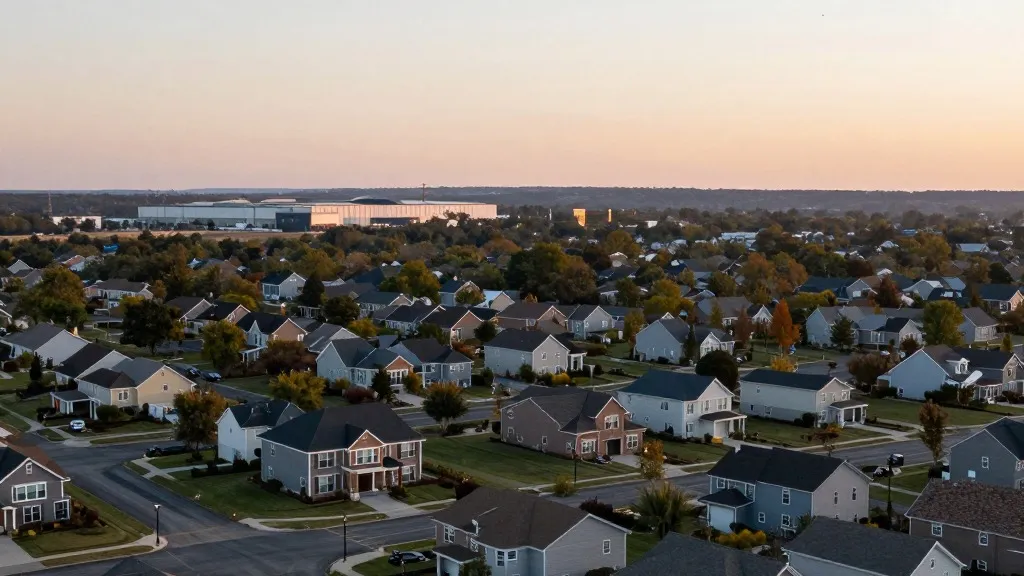
Twelve hundred twenty acres of former university land in Loudoun County, Virginia, will no longer host the massive data center complex that Amazon had proposed. The tech giant has officially withdrawn its plans to build four new facilities on the site of the George Washington University campus, located just outside Washington, D.C. Instead, the company will repurpose the majority of the space for mixed-use and residential development. This decision marks a significant shift in strategy for one of the world's largest cloud providers, which has previously been an aggressive builder of data center infrastructure.
The retreat follows intense scrutiny from local residents who have long opposed the expansion of data centers in the region. Loudoun County is already known as Data Center Alley due to its high concentration of such facilities. Residents have raised concerns about the noise generated by cooling systems and the substantial energy requirements of these buildings. Amazon first submitted its proposal in July of this year. By September, the company met with Phyllis J. Randall, the chair of the Loudoun County Board of Supervisors. During these discussions, county officials suggested that an alternative use for the land might be more appropriate than the original plan.
Josh Weissman, Amazon’s vice president in charge of data center development, explained the company's change of course. He noted that the firm had initially been eager to purchase the property when it became available. However, the company ultimately decided to respect the county’s pointed concerns about building data centers at that specific location. Weissman stated that while Amazon viewed the legal development potential of the site differently than the county did, they concluded that a shared vision was better than costly litigation. The company will now donate 25 acres of the property to the county for a community arts center and a new recreational facility. Additionally, Amazon will contribute five million dollars to the county’s housing fund.
This agreement comes at a time of heightened tension between tech companies and local communities. The rapid growth of artificial intelligence has driven demand for larger and more numerous data centers. This boom has strained local infrastructure, particularly power grids. Officials in various regions have begun taking steps to manage the pace of construction. In a related development, President Donald Trump recently called for data center builders to pay dividends to local communities as electricity prices rise. He also proposed that these facilities generate their own power and sell excess energy back to the grid. Water usage and deforestation have also emerged as key issues for communities hosting these large-scale projects.
County officials have framed the outcome as a success of diplomacy. In a statement, Randall said that choosing dialogue over reflexive disagreement created an opportunity for the county. She emphasized that the new plan provides spaces for residents to gather and create. Most importantly, she noted, it will help provide more attainable homes for working families. The agreement appears to satisfy a local desire for housing and public amenities over industrial expansion.
However, questions remain about the broader implications for the region's energy capacity. Critics argue that the power grid in Northern Virginia is already operating near its limits. They contend that the physical constraints of the local infrastructure would have made it difficult to power four new data centers regardless of community sentiment. Some residents and analysts suggest that the county’s decision is less about dialogue and more about simple mathematical limits on available electricity. They argue that the region cannot support more power-hungry facilities until new transmission lines are built.
There is also skepticism regarding the financial logic of Amazon’s decision. Observers have asked why the company did not sell most of the land back to recoup costs. The prevailing narrative in the tech industry is that artificial intelligence spending is limitless because predicted revenue growth will eventually outpace investment. Yet, this agreement suggests that local political pressure can still influence even the most ambitious tech projects. The company is essentially swapping a future industrial project for luxury housing and public spaces.
The move also highlights the ongoing debate about the trade-offs of modern technology infrastructure. While cloud services and AI models require physical space, the environmental and social costs are becoming increasingly visible to the public. The Loudoun County case may serve as a template for other regions facing similar pressures. It demonstrates that even a global giant like Amazon can be persuaded to alter its plans when faced with organized local opposition. The outcome leaves the county with more housing and public amenities, while Amazon avoids a potential legal battle and maintains a positive relationship with local stakeholders.
As the construction of new data centers continues elsewhere, the Loudoun County agreement stands out as a notable exception. It underscores the growing importance of local politics in shaping the digital landscape. The story also raises questions about the long-term sustainability of the current data center model. If local grids are maxed out and communities are resistant, tech companies may need to find new ways to situate their infrastructure. For now, the 122-acre site in Virginia will see a mix of homes and public spaces rather than server farms.
Source: Tom's Hardware · original report published