Tesla Pushes Optimus Handover to End of 2027, Acknowledges Hardware Hurdles
Elon Musk outlined significant challenges with the robot's hands, durability, and AI architecture, delaying external deliveries of the humanoid unit to late 2027.
By Neha Delgado ·
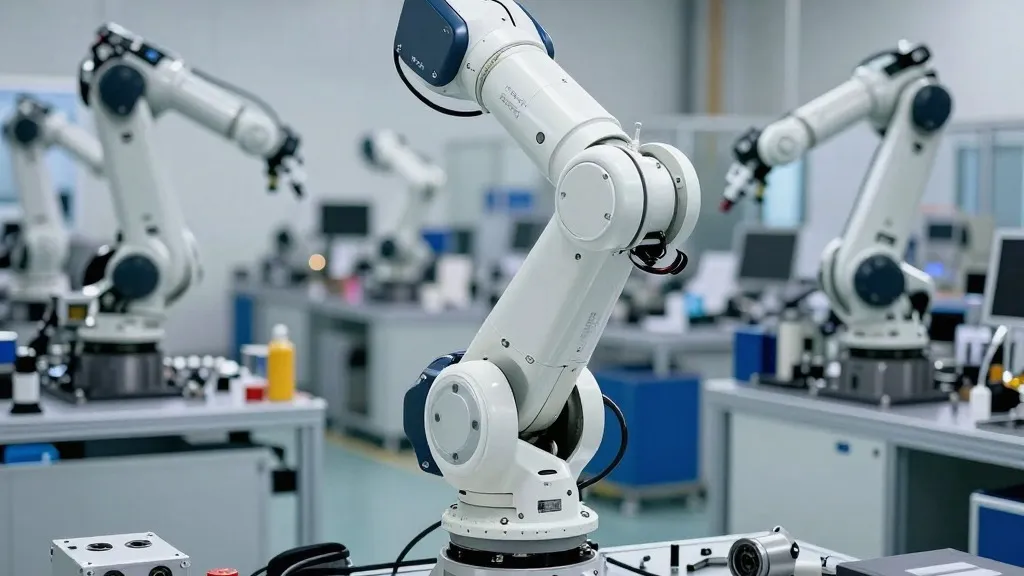
Tesla CEO Elon Musk has extended the timeline for delivering Optimus humanoid robots to external customers, now targeting the end of 2027. During the company's Q3 2026 earnings call on October 22, Musk acknowledged that three critical areas, hardware durability, specifically the hands, and artificial intelligence capabilities, require further development before the units can be deployed outside the company.
The delay marks a shift from previous projections. In 2024, Musk had indicated that high-volume production for other companies would begin in 2026. While Tesla has ramped up production to hundreds of units per week, the company's recent shareholder letter describes current units as the first 'production-quality' robots manufactured. The hardware challenges are centered on the robot's hands; a Tesla engineer noted that the hand, along with custom gears that present reliability concerns, remains difficult to engineer. Musk elaborated that fingers must be soft enough to handle delicate objects but durable enough to withstand constant wear, a balance he noted is difficult to achieve because 'robots can’t heal like human skin can.'
On the software front, Musk explained that Tesla is still resolving issues within the AI architecture. Unlike its automotive division, which utilizes a fleet of vehicles to gather data for Full Self-Driving technology, Tesla lacks a comparable network for its robots. To address this, the company plans to deploy between 10,000 and 20,000 units for training purposes in what it terms an 'Optimus Academy,' where they will practice tasks to improve generalization. Additionally, Tesla intends to integrate its AI5 chip into the Optimus platform around April 2027.
Despite the setback, Musk asserted on the call that 'there is no one that is even close to Tesla' regarding general-purpose humanoid robots. However, competitors are advancing rapidly. XPeng activated an automated production line for its IRON robot in Guangzhou in September, featuring over 80% automation of core processes. XPeng plans mass production by the end of 2026, with deliveries beginning in the first half of 2027, a schedule that mirrors or slightly precedes Tesla's revised timeline.
Boston Dynamics, owned by Hyundai, is also making significant strides with its electric Atlas robot. The company began production in January 2026 and reports that all deployments for the year are committed, including units for Google DeepMind. In September, Boston Dynamics opened a training center at Hyundai's Metaplant in Georgia to teach Atlas to sequence car parts for assembly lines. Hyundai plans to deploy 25,000 robots across its facilities over the next few years. Notably, Boston Dynamics hired Milan Kovac, who previously led Tesla’s Optimus program, in January.
While XPeng has not yet shipped IRON to paying customers, its timeline for mass production is set for the end of 2026. Boston Dynamics has adopted a pragmatic strategy regarding hardware, prioritizing sturdy grippers capable of handling industrial parts over human-like dexterity. This approach bypasses the specific durability issues with synthetic fingers that currently hinder Tesla's progress.
Musk promised to release a video within a month or two demonstrating Optimus performing tasks that are not pre-programmed, aiming to prove the system's autonomy. However, timelines for Optimus have shifted repeatedly in the past, moving from internal use in 2025 to external deliveries in 2026, and now to late 2027. As the company seeks to prove the viability of the unit to investors, the focus remains on whether the robot can reliably perform work rather than simply manufacture hardware.
The current target for external deliveries remains late 2027. Until then, Tesla will continue to focus on resolving the electromechanical design issues and refining the AI capabilities required for the robot to operate safely in industrial environments.
Source: Electrek · original report published