Spain Faces 69 New Rail Deaths and Safety Doubts Before National Vote
A collision in central Spain killed 69 people and hospitalized 50, compounding a January disaster and complicating Prime Minister Sánchez's election campaign.
By Neha Delgado ·
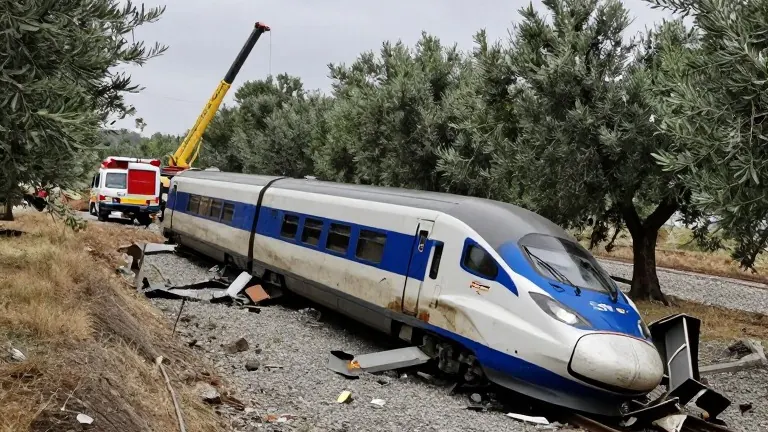
Spain declared three days of mourning on Thursday after a high-speed train collision in central Spain killed 69 people. The incident marks the second fatal rail disaster in the country this year. Officials confirmed the updated death toll early Thursday morning after search teams with sniffer dogs continued their work at the crash site.
The collision occurred Wednesday at 8:53 a.m. in the province of Toledo. At least three train carriages were thrown onto a gravel slope. Cranes were used to shift the wreckage, while police and military personnel picked through debris. Regional leader Emiliano García-Page stated that 50 people remained hospitalized. He noted that identification work is ongoing because body parts require processing.
Transport Minister Óscar Puente attributed the cause of the crash to a command center error following a system failure. At 8:30 a.m., a computer malfunction stopped the security system on a 63-kilometer stretch of track. This forced all trains on that segment to halt. An IRYO train stopped near the town of Urda, while a RENFE train remained 25 kilometers behind. Minutes later, central command instructed the RENFE train to restart without speed restrictions. Puente said the train should have remained stopped or moved at a reduced speed because a stop signal was still active.
Both fatal crashes this year occurred on the same rail line. Each involved a train operated by the state-owned RENFE and a privately operated IRYO train. Spain opened its high-speed rail network more than 30 years ago. Until this year, the system had not suffered a deadly crash. The network is the second largest in the world, behind China. It carried 45 million travelers last year.
The disaster happened four weeks before Spain's first national election since 2023. Prime Minister Pedro Sánchez visited the site in Toledo on Wednesday. He pledged an investigation and safety improvements. Sánchez stated that two high-speed accidents in one year are unacceptable for a country with such an extensive rail network. His administration had previously relied on housing costs and high rents to drive voter sentiment. Sánchez posted a message on X about optimism just one hour before the crash news spread.
Polls indicate Sánchez faces an uphill battle in the upcoming vote. Right-wing parties are criticizing his migration policies and raising corruption accusations against his party and his wife, which both deny. Popular Party leader Alberto Núñez Feijóo demanded a full investigation on Wednesday. He canceled his party's campaign events to respect the victims. He said Spaniards are asking tough questions that require answers.
Far-right leader Santiago Abascal reacted with less restraint. He described the event as a tragedy and expressed rage over what he called the government's betrayal. Abascal promised to work until the government answers for its actions in court. Vox is likely to seek a coalition with the conservatives.
Thousands of travelers are stranded as the Madrid-Seville high-speed line remains shut down. RENFE is not selling tickets online for this service until mid-December. Search teams and cranes continued operations on Thursday morning as the country processes the loss of life and questions the integrity of its rail infrastructure.
Source: WKMG-TV