Spain's Rail Network Faces Safety Scrutiny After Second Fatal Crash in 2026
A collision between state and private trains killed 68 people in Toledo, forcing the government to declare a three-day national mourning just weeks before a general election.
By Karan Meyer ·
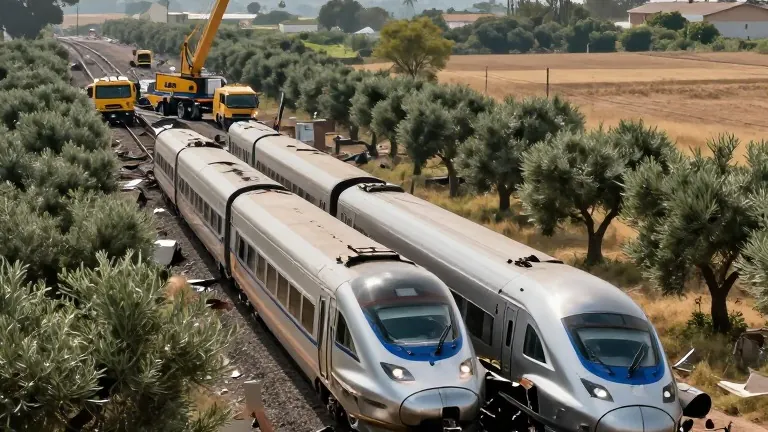
A rear-end collision between two high-speed trains killed 68 people in the central province of Toledo on Wednesday, marking the second fatal rail disaster in Spain this year. Prime Minister Pedro Sánchez declared three days of national mourning beginning Thursday after regional authorities confirmed the death toll and reported that dozens of survivors were receiving treatment in local hospitals.
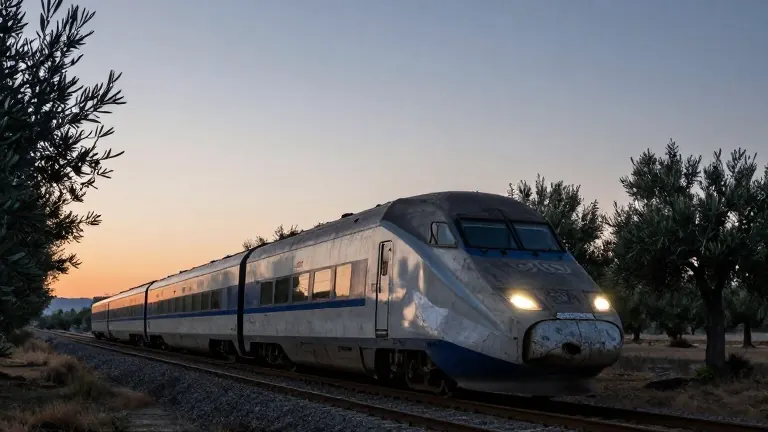
The crash occurred near the town of Urda on a track segment lined with olive groves. The incident involved a state-owned RENFE train and a privately owned IRYO train. It is the second deadly accident on Spain's high-speed network since January, when a derailment in the south claimed 46 lives. The network, which ranks second in the world behind China in track mileage, had previously avoided fatal crashes for over three decades since its inception.
Transport Minister Óscar Puente attributed the collision to a computer malfunction in a security system that affected a 63-kilometer stretch of the line. At 8:30 a.m., the system failure caused all trains on that segment to halt. The IRYO train stopped near Urda, while the RENFE train remained 25 kilometers behind. A few minutes later, central command instructed the RENFE train to resume movement without speed restrictions, leading to the impact at 8:53 a.m.
Puente stated that the RENFE train should not have been cleared to move while a stop signal remained active, or should have been ordered to travel at a reduced speed. He emphasized that the train engineers were not at fault for the "inexplicable" order from the control center. The minister did not announce a resignation despite facing media questions about his future after two major wrecks under his tenure.
Sánchez visited the crash site and pledged an investigation into the incident. He noted that the system carried 45 million travelers last year, including millions of tourists, and said the government must reinforce safety to rebuild public trust. The Prime Minister noted that it is not acceptable for Spain to endure two such accidents in a single year.
The disaster lands four weeks before Spain's first national election since 2023. Sánchez had recently called for early votes, hoping to capitalize on voter dissatisfaction with housing costs. His Socialist party now faces a tougher campaign environment. Popular Party leader Alberto Núñez Feijóo called for a full investigation and suspended his party's campaign events for the day to respect the victims. He stated that the dead and their families must be honored, but that Spaniards are asking tough questions that require answers.
Santiago Abascal, leader of the far-right Vox party, released a statement hours after the crash describing the event as another tragedy and a source of rage. He vowed to work until the current government, which he called a criminal organization, answered for its actions in court. Abascal is positioned to form a coalition with the conservatives in the upcoming election.
Source: Central Florida Public Media