Meta Runs AI on Google Chips
Google's TPUs are now serving Meta's production AI workloads, marking the first time these chips are sold to external customers.
By Karan Meyer ·
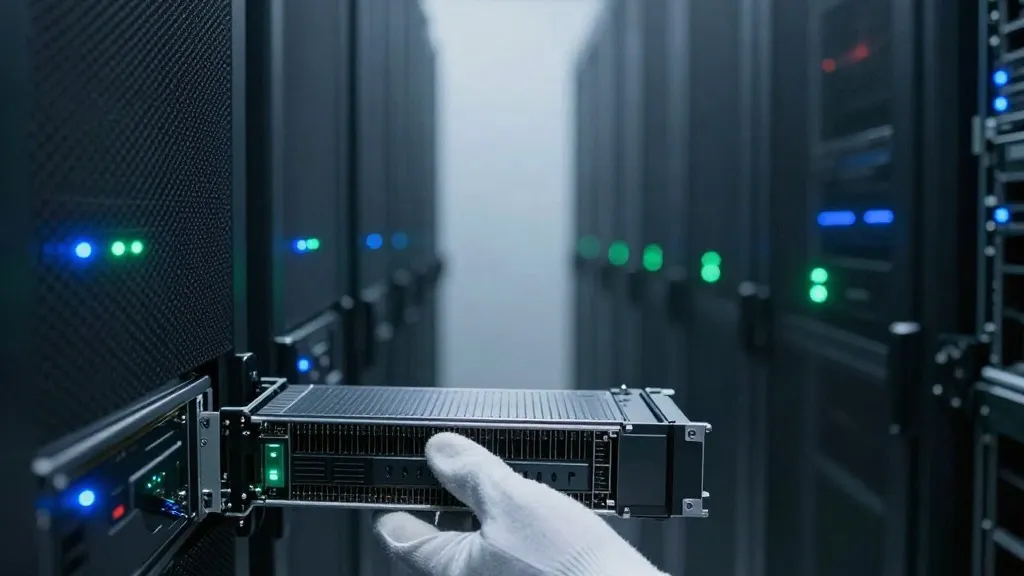
Google's custom AI chips are now running inside Meta's data centers.
In a significant shift for the AI hardware market, Google announced that its Tensor Processing Units (TPUs) are now serving AI in production at Meta. This move marks the first time Google has sold its TPUs to external customers, positioning them as a direct competitor to Nvidia's dominance in the AI accelerator space. The deployment is enabled by a new PyTorch-native version of the SGLang inference engine, which was released on Google's developer blog.
Previously, running AI workloads on TPUs required the use of Google's own JAX AI framework. The new SGLang-TorchTPU and a corresponding open-source version of vLLM are built for PyTorch, allowing developers to use TPUs without significant code changes. Meta's PyTorch-TPU lead, Zongwei Zhou, stated that 'SGLang-TorchTPU is running in production at Meta today' after a 'close three-way collaboration between Meta, Google, and the SGLang team.' This collaboration provides Meta 'a remarkably mature, PyTorch-native serving stack.' Jana van Greunen, Meta's director of PyTorch engineering, noted that 'we cannot be constrained by a single hardware architecture' and that TorchTPU 'enables us to deploy our PyTorch workloads to Google TPUs.'
This is not the first time Meta has explored using Google's TPUs. The company used an earlier bridge from PyTorch to TPUs, called PyTorch/XLA, for research projects from 2020 to 2023 before those contracts were canceled. Google's current effort to make TPUs compatible with PyTorch was aimed primarily at Meta, which was unwilling to switch its AI framework to JAX. The exact location of the production TPUs is unknown, but reports from last year indicated that talks included Google Cloud TPU rentals for 2026 and purchases for 2027, and Meta later reportedly signed a multi-year rental agreement.
This announcement from Google and Meta comes one day after Amazon open-sourced TorchNeuron, its own native PyTorch backend for its Trainium chips. Both moves are aimed at reducing reliance on Nvidia's software ecosystem.
On performance, a tuned vLLM setup running on Google's seventh-generation Ironwood TPU reportedly achieves over 700 tokens per second for a single user when serving Moonshot AI's 2.8-trillion-parameter Kimi K3 model. This test, conducted by Inferact, a startup founded by vLLM's creators, compared its performance against a vLLM setup on 16 Nvidia GB200 chips, which reached 452 tokens per second. The SGLang-TorchTPU project will continue to add support for more models, including DeepSeek V4.1 Flash and Reflection Beam, with a goal of providing Day 0 support for new open models by the first quarter of 2027. Google, Meta, and RadixArk plan to discuss these developments further at the SGLang Summit in San Francisco on November 12-13.
Source: Tom's Hardware · original report published