Brazilian Election: Lula Claims Fourth Term With 64.2 Million Votes
Luiz Inácio Lula da Silva defeated Flávio Bolsonaro by more than four million votes, a result the challenger plans to challenge in court.
By Karan Meyer ·
Brazilian President Luiz Inácio Lula da Silva secured a fourth term on Sunday after receiving 64.2 million votes in the presidential runoff. His opponent, Flávio Bolsonaro, obtained 59.8 million votes, leaving Lula with a 51.79 percent share of the total count. The margin of victory exceeded four million votes, a result that reversed the momentum established in the first round held on October 4. At that time, Flávio Bolsonaro held a two point lead, a gap that pollsters described as difficult to overcome given the right wing's strong showing in concurrent legislative elections.
In his victory speech, Lula credited young voters for taking to the streets to defend democracy and older citizens for casting ballots to reduce the high abstention rates seen in the first round. He framed the election as a choice between a democratic model and the authoritarian tendencies associated with the Bolsonaro family. The President stated that Brazil has proven it does not accept being a backwater to the United States, asserting a desire to remain central rather than peripheral in global discussions.
Flávio Bolsonaro refused to acknowledge the defeat immediately after the results were announced. He announced that he would petition the courts to annul the elections, citing a judicial decision that extended voting hours by two across the country. The order came from Supreme Court Justice Cristiano Zanin, a former lawyer for Lula, and was issued one minute after the standard closing time. Zanin’s decision followed a request from Lula’s campaign, which argued that insufficient free bus services in right wing controlled cities disadvantaged poorer voters who typically support the left.
The delay caused technical, operational, and security difficulties, according to Kassio Nunes Marques, the president of the Superior Electoral Court. Many polling stations did not receive the order in time and closed at their regular hours, creating confusion among voters. Flávio Bolsonaro called the incident unacceptable and a violation of the right to equality. He stated that the rules of the game were changed by Lula’s allies on the Supreme Court.
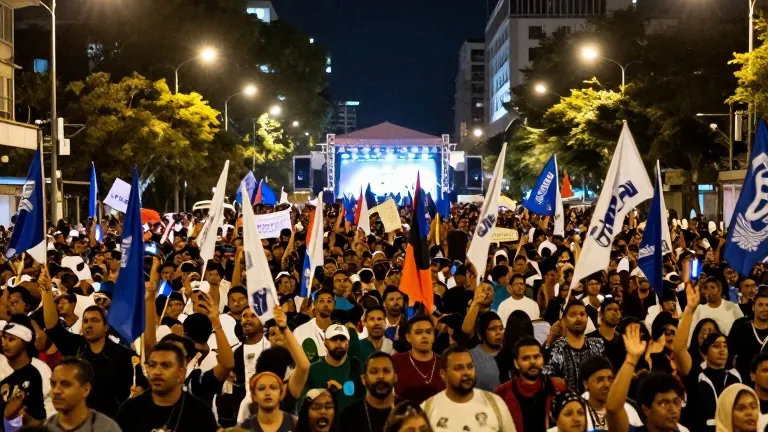
Despite the legal challenges, legislative leaders Hugo Motta and Davi Alcolumbre recognized Lula’s victory. Both men are allies of the President. The result sparked large celebrations in cities across Brazil, with the largest gathering in São Paulo. Tens of thousands of supporters filled Avenida Paulista, chanting against dictatorship. The size of the crowd surpassed the celebration from Lula’s previous election victory four years ago.
At nearly 81 years old, Lula adapted his campaign strategy for the runoff by adopting social media platforms for the first time. This shift, combined with a fear based campaign warning of the risks associated with a Bolsonaro presidency, contributed to his comeback. The victory sets up a period of negotiation for Lula, who must work with a Congress that is the most right leaning in the country’s history.
Source: Latin Opinion