Sun Xun Bets Entire Savings on Animated Feature 'Magic Atlas' for Tokyo Debut
The Chinese filmmaker spent a decade creating a film set in a coal-mining empire, drawing on Buddhist faith and art history to craft a competition entry for TIFF.
By Karan Meyer ·
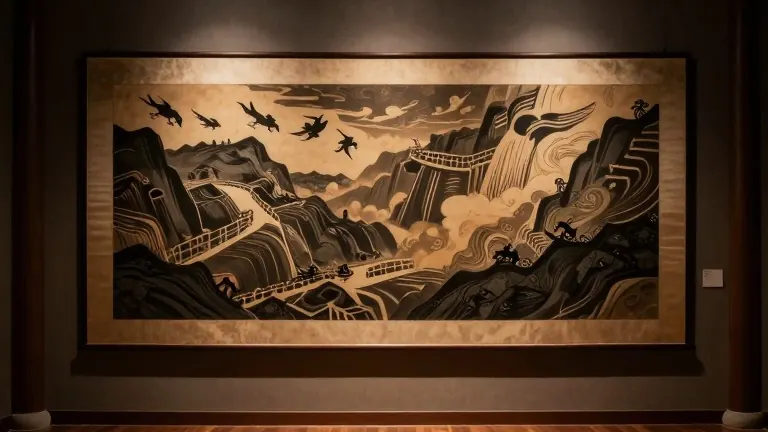
Chinese artist Sun Xun invested every dollar of his personal savings into an animated feature that took ten years to complete. The film, titled Magic Atlas, has become the first animated competition selection for the Tokyo International Film Festival.
The project began as a visual art piece but evolved into a narrative feature during the global pandemic. When galleries closed, Sun’s art sales stopped. He took out loans and actively sought buyers to fund production. The timeline of the film’s creation spans a decade, a period that included the war in Ukraine and Sun’s own conversion to Buddhism.
Sun describes the film as a fusion of art forms rather than a traditional animation. He states, "I never thought of 'Magic Atlas' as an animated film. To me, it brings together many art forms. Animation is simply the label we use for its form." The story is set in Luocha, a coal-mining empire where flying is prohibited. Every 60 years, a festival causes the population to forget the previous era. The plot follows an orphan boy who receives a magical book from a magician in prison. The book guides the boy toward a history the empire has erased.
The visual style shifts between woodblock prints, ink painting, and vivid colors. Sun drew inspiration from Dunhuang murals, Song dynasty painting, and calligraphy. He also incorporated imagery of ancient civilizations, such as pyramids, and mythological elements. He says the film reflects the divisions he sees in the world without commenting on any single event. He notes, "Film cannot address reality directly, but it can take a wider view. It can express how we understand the world and what we are curious about."
Sun calls the project his defining artistic moment. He believes every creator should have one "all-in" moment that demands their total effort. He aimed to finish the film before his child grew up and while his parents were alive. His father died a year before the film was completed. Sun compares his approach to that of filmmakers Andrei Tarkovsky and Béla Tarr, praising their sincerity in exploring existence rather than relying on simple narratives.
The filmmaker rejects the idea that film must prioritize clear story packaging for commercial success. He says, "I’m actually against 'story.' I don't mean that films shouldn't have stories. I object to films that emphasize story for the sake of packaging and commercial purposes. As an art form, film should express a state of being." He acknowledges a barrier to entry for viewers but states he made the work for himself. He adds, "My goal was to realize it, not to please every viewer."
Exhibitions connected to Magic Atlas are planned for the United States and Singapore, though specific venues and dates have not been announced. Sun has begun work on a new feature titled All or Nothing, which has the Mandarin title Fuyou, meaning Mayfly. This new film will continue the world of Magic Atlas, shifting focus from the broad theme of forgetting to an individual experience of memory loss.
Sun filmed the first shot of the new project at an exhibition space in Hangzhou. He hopes to finish that feature within two years. The selection of Magic Atlas for the Tokyo competition marks the first time an animated film has entered the main competition at the festival.
Source: Variety