Pompeii Closet: Sealed Room Reveals 2,000-Year-Old Daily Life
Archaeologists found coins, cosmetics, and a child's amulet necklace in a dwelling that was first dug up in 1912.
By Karan Meyer ·
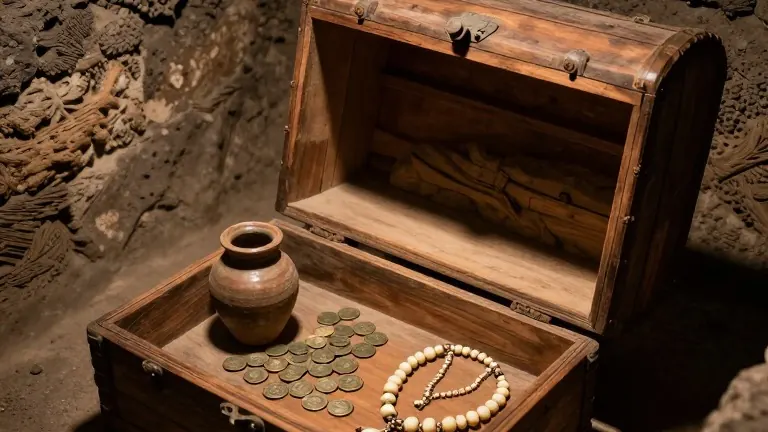
Archaeologists in Pompeii, Italy, opened a sealed closet inside a central residence and recovered a cache of personal items that had remained untouched since A.D. 79. The collection includes 38 bronze coins, a wooden chest containing commercial weights, and a necklace with at least 20 miniature objects. The Pompeii Archaeological Park released the findings this week, confirming the discovery comes from a house located on one of the city's main streets.
The dwelling was initially excavated in 1912. However, work on the surrounding areas has only recently begun, allowing researchers to access parts of the structure that were previously blocked. The team found the closet intact, preserving a snapshot of domestic life before the eruption of Mount Vesuvius destroyed the city. The presence of the bronze coins, stored in a plant-material container, suggests the residents did not have time to pack up their valuables before the disaster struck.
Among the recovered objects is a necklace known as a crepundium, or rattle, which typically served as a protective amulet for children. This specific piece features multiple deities and is crafted from bone and crystal. The park noted that many Romans kept these items into adulthood as keepsakes. Other finds include an incense burner, a bronze lantern, a balsam jar, and a refined snuff bottle decorated with pine motifs. Vases and pots made of bronze, glass, and ceramic were also retrieved from the space.
Director Gabriel Zuchtriegel stated that while the exact identity of the residents remains uncertain, the artifacts offer a clear view of their daily routines. In a Facebook post, he added: "We cannot reconstruct with certainty the identity of those who lived in the house, but these fragments bring us closer to their daily lives." The house has been previously linked to a man named Cornelius Maximus based on inscriptions that are no longer visible, but the new finds do not confirm that connection.
The interior walls of the home feature paintings that indicate a certain standard of living. However, mouse skeletons found inside the house suggest the space also hosted wildlife. The park noted that similar remains have been discovered elsewhere in the city, indicating that Pompeii residents frequently dealt with unwanted visitors. The site is a UNESCO World Heritage Site, and excavation continues beneath layers of volcanic ash and pumice.
This discovery follows a series of recent announcements from the site. In January, researchers revealed a 2,000-year-old love note and an illustrated gladiator fight scene on a city wall. In December 2025, archaeologists reported evidence that some residents returned to live in the city after the eruption. The new findings from the closet add to the growing body of evidence regarding how people in Pompeii lived, worked, and prepared for their future.
The park said it is impossible to know what became of the people who owned these items. They may have survived the eruption but were unable to return and dig out their belongings. Alternatively, they may have died in the disaster or in the aftermath, leaving no heirs to claim the objects. The sealed closet preserves these personal effects exactly as they were left in the chaos of the eruption.
Source: CBS News
More Culture · World news · Report a business · Got a Story?