NHTSA proposes cyan marker lights to identify autonomous vehicles on the road
Federal regulators suggest a distinct blue-green glow to help drivers and police identify cars operating without human control.
By Karan Meyer ·
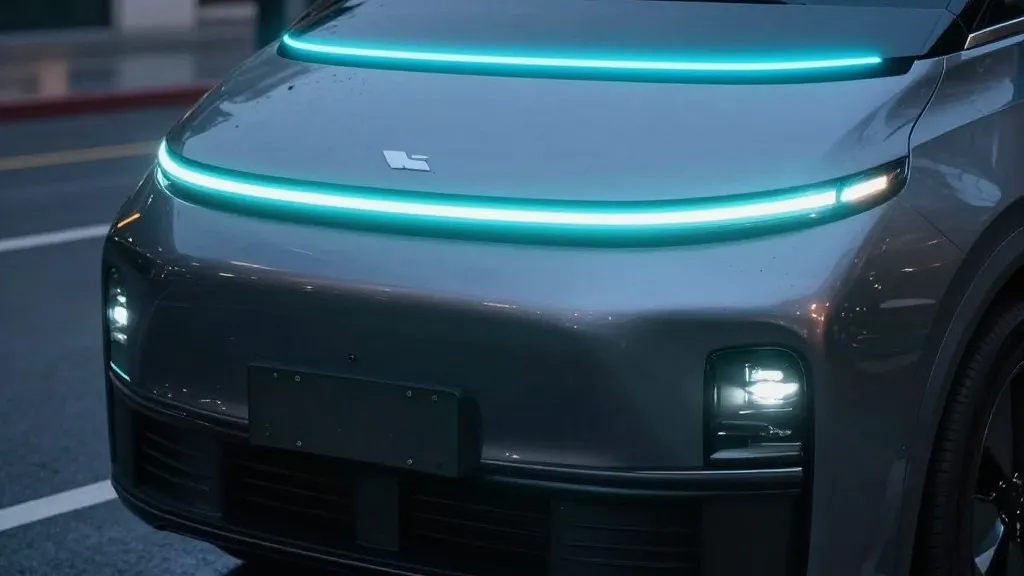
The long-running debate over how to visually distinguish driverless vehicles from human-operated cars has reached a regulatory milestone. The National Highway Traffic Safety Administration has released a proposal that would standardize the use of cyan-colored marker lamps for autonomous vehicles.
The agency is seeking to amend Federal Motor Vehicle Safety Standard No. 108 to accommodate the unique needs of self-driving technology. The primary goal is to create a clear and consistent signal for law enforcement and other road users indicating that an automated driving system is in control. By selecting cyan, or blue-green, the regulators aim to fill a visual gap in the current automotive color palette. Red, amber, white, and flashing blue or red lights are already reserved for specific functions such as braking, turning, headlights, and emergency services. A new color would theoretically reduce confusion for everyone on the road.
This proposal follows earlier state-level experiments with similar lighting concepts. Mercedes-Benz previously received approval to use turquoise lights for its Level 3 Drive Pilot system, although the company later shifted its strategy toward a Level 2++ approach. The federal move seeks to establish a uniform national standard that can be adopted by major robotaxi operators like Waymo, Nuro, and Zoox, as well as traditional automakers including GM and Mercedes.
Under the current draft, the installation of cyan marker lights would remain optional for manufacturers. However, the NHTSA intends to define strict federal standards regarding the specific color, brightness, and placement of these lamps. This ensures that if an automaker chooses to include the feature, the setup is legally consistent and recognizable, rather than a chaotic mix of varying signals from different companies.
The proposed rule change also aims to streamline other aspects of vehicle design for autonomous models. The agency proposes removing requirements for physical controls that are redundant in driverless cars, such as manual hazard switches, beam shifters, and turn levers. Additionally, the NHTSA is looking to update the 12.8-volt testing standard to better support modern LED architectures and is considering relaxing rules regarding the relative position of high-beam and low-beam lights.
This initiative is part of a broader Department of Transportation effort to ease the deployment of autonomous vehicles. The administration wants to simplify the process for building cars without traditional human-centric controls like steering wheels and pedals. Despite this push for flexibility, regulators are still holding manufacturers accountable to existing rules. Last month, the NHTSA launched an audit query into the Tesla Cybercab to review the technical data used for its certification, specifically questioning the absence of required features like sideview mirrors, pedals, and a steering wheel under current safety standards.
Source: The Verge · original report published