NASA's Moon Landing Plan Now Hinges on 22 Starship Launches
New safety estimates reveal that the Artemis program may require significantly more orbital refueling flights than previously hoped, raising questions about the timeline.
By Chloe Phillips ·
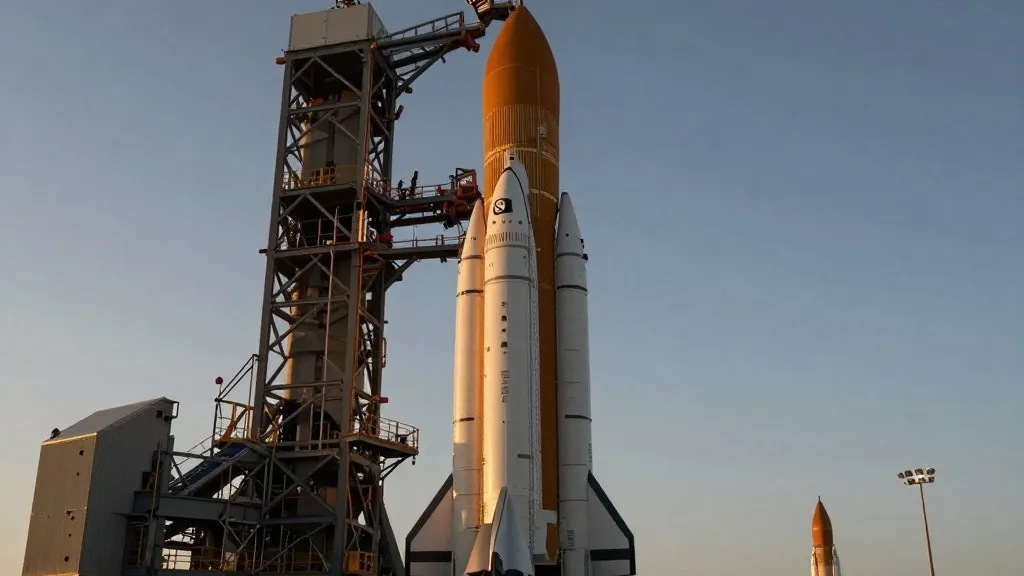
For years, space enthusiasts and industry analysts have speculated about the logistical hurdles of returning humans to the lunar surface, but the specific data points have remained tightly held secrets. On Thursday, the curtain was finally pulled back on one of the most guarded metrics in the Artemis program: the exact number of rocket launches needed to make a crewed moon landing feasible.
The new estimate, shared during a quarterly meeting of the NASA Aerospace Safety Advisory Panel, suggests that 22 launches are required to support the mission. This figure represents a significant shift from earlier, more optimistic projections and highlights the immense complexity of fueling a spacecraft in low-Earth orbit before it embarks on a journey to the Moon and back.
NASA has historically been reticent about sharing this specific number, treating it with a level of caution often reserved for sensitive security data. In 2023, Lisa Watson-Morgan, who was then the director of the Human Landing System, acknowledged that the agency had a general idea of the requirements but was reluctant to commit to an exact figure. At that time, she characterized the need as being in the "high single digits to the low double digits," which implied a requirement of roughly a dozen flights.
Other officials have previously cited figures in the "high teens," reflecting a range of uncertainty that has persisted for years. The core of the mission involves SpaceX launching a "depot" version of Starship into orbit. This stationary vessel then requires multiple "tanker" Starships to ferry liquid oxygen and methane propellant to it. The goal is to fully load this depot so it can depart for the Moon, land, and return its crew to lunar orbit.
The hope that drove earlier planning was that SpaceX would rapidly improve the lift capacity of the Starship vehicle. Such improvements would drastically reduce the number of tanker flights needed to fill the depot. However, concerns are growing among some NASA officials that these performance gains may not arrive quickly enough to allow Starship to play a meaningful role in this decade’s moon landing goals.
The new estimate of 22 launches was presented by Charlie Precourt, a panel member and former NASA astronaut, who spoke about the risks associated with the Artemis program. His presentation underscored the operational challenges of coordinating so many separate orbital rendezvous and refueling operations, a process that demands high precision and reliability.
The stakes are high for the Artemis program, which aims to reestablish a human presence on the Moon. The number of launches required directly impacts the schedule, the budget, and the overall risk profile of the mission. A higher number of flights means more opportunities for technical glitches and more time spent in orbit before the crew can depart.
As NASA moves forward, the focus will be on whether SpaceX can accelerate the development of more powerful Starship variants. If the current trajectory holds, the program will need to rely on a large fleet of tanker launches to achieve its goals, making the next few years critical for both the agency and its partner.
Source: Ars Technica · original report published