Kazakhstan Releases Second Tiger Into Central Asian Reserve
A joint $30 million project aims to build a self-sustaining population of 50 cats, despite local concerns over livestock predation.
By Karan Meyer ·
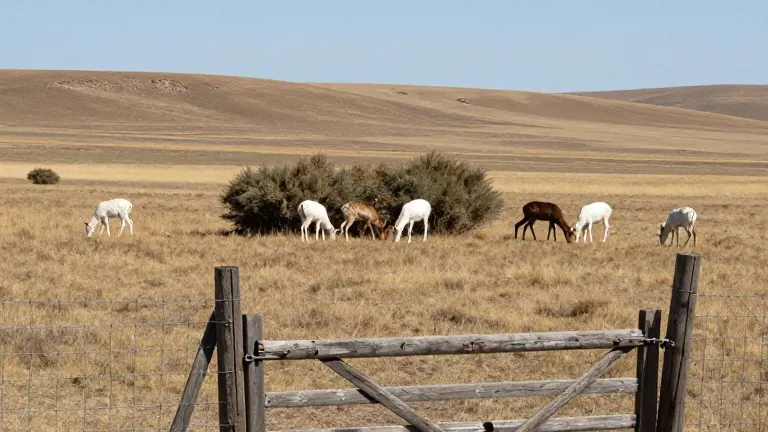
Residents in villages near the Ile-Balkhash State Nature Reserve now share their landscape with two large predators. On November 2, the Kazakhstan Ecology and Natural Resources Ministry released a male tiger named Amur into the protected area. This action marks the second major step in a reintroduction effort that has not been seen in the region for nearly eight decades.
The male joins Umit, a female tiger from Russia who was released into the same reserve on July 31. Umit has established herself in the wild, killing and consuming a boar and a wolf within ten days of her arrival. The two animals now occupy a habitat located approximately 300 kilometers northwest of Almaty.
The project carries a price tag of $30 million. It is a joint financial and operational effort between Kazakhstan and Russia, with Russia providing the animals. Funding sources include the World Wildlife Fund, the UNDP, and the Kazakh government. The reserve was established in 2018 and prepared specifically for the tigers by introducing more than 200 deer and over 100 kulans to create a stable prey base.
Local economic interests are watching the development closely. Valery Bilyachenko, who operates a recreational fishing base near the release site, reports that opposition is high in nearby villages. These communities rely on livestock farming for their primary income. Bilyachenko noted that residents fear the tigers will kill their cattle and other animals on the pastures.
To manage these risks, authorities have implemented several monitoring protocols. Both tigers wear satellite tracking collars that allow officials to monitor their movements in real time. Automated text messages will alert residents if a tiger comes within five kilometers of a village or farm. Specialized teams are also on standby to drive the animals away if they approach human settlements.
Alibek Kuantyrov of the Ecology and Natural Resources Ministry stated that the goal is to create a stable population capable of independent breeding. While officials hope the two released tigers will mate, experts caution that the probability of this occurring is low. Sergey Aramilev, director-general of Russia's Amur Tiger Center, described the initiative as a signal to the world that restoring a historically extinct large predator is possible.
The timeline for expansion is already set. Two additional young tigers are scheduled for release into the reserve in 2027. The long-term target is a population of approximately 50 big cats. This growth could stimulate tiger-spotting tourism, although Bilyachenko expects little immediate impact on his own fishing lodge business.
Historical records show that Kazakhstan once supported a large tiger population. Hunting and habitat loss reduced the numbers to an estimated 10 animals by the mid-1930s. The species is believed to have disappeared entirely from the country by 1948. The current project seeks to reverse that extinction in the territory of modern-day Kazakhstan.
Source: RFE/RL
More Business · World news · Unethical Practices · Report a business · Got a Story?