FARMZER0 Converts Chicago Vacant Offices Into Vertical Farms
The startup uses 650-square-foot units to grow greens for local chefs, aiming to address the city's high office vacancy rates.
By Chloe Phillips ·
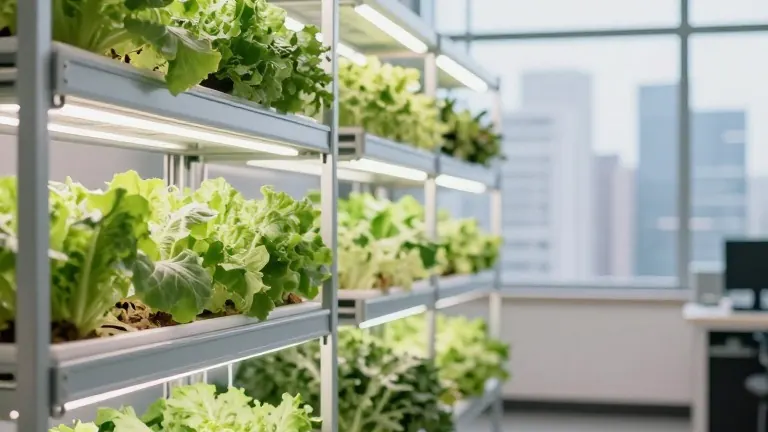
FARMZER0 has established a vertical farming operation inside a vacant office tower in downtown Chicago. The company is currently using a 650-square-foot unit to cultivate edible greens. These crops are delivered to nearby restaurants, caterers, and residential high-rises.
Russell Steinberg is the founder and CEO of FARMZER0. He identifies three major urban issues that the company targets. These include office vacancy, public health concerns, and food system inefficiencies. Chicago currently holds approximately 45 million square feet of empty commercial space. Steinberg estimates that only 2 million square feet of that total would be required to supply the entire city with adequate vegetables.
The post-pandemic recovery in Chicago’s business district has left a vacancy rate between 25% and 30%. Much of this empty space exists in older office buildings. Steinberg notes that older infrastructure presents more challenges for repurposing. Newer commercial spaces are easier to convert because they have modern systems. The current FARMZER0 location utilizes a small footprint within a vacant floor.
The farming operation requires a continuous water supply to keep the plants hydrated. Steinberg states that the water usage is lower than what a fully functioning office would consume. The system operates quietly. The primary noise comes from workers using scissors to harvest the produce.
Matthew Wilde runs Blue Plate Chicago, a catering service. He sources greens from FARMZER0 for his menu. Wilde describes the partnership as a mutually beneficial arrangement. He values the ability to offer farm-to-table ingredients grown in an urban setting. He also emphasizes the importance of supporting local food production, even if that production occurs within city limits.
Kimberly Gray is a civil and environmental engineering professor at Northwestern University. She researches urban reinvention strategies. Gray considers vertical farming a viable option for metro areas. She argues that growing food in cities can make fresh produce cheaper for urban communities. This method also reduces the pollution associated with the final stage of goods delivery.
Steinberg has received inquiries from other cities interested in replicating the high-rise farming model. He is currently exploring a partnership with city officials in Los Angeles. The goal is to implement a similar project for the 2028 Olympic Games.
Source: WUSF Public Media
More Business · Unethical Practices · Report a business · Got a Story?