Houdini's 100th Death Anniversary Draws New Attention to Detroit Sites
As the centennial of the magician's death arrives, historians and fans revisit the specific locations in Detroit where Houdini performed and died.
By Neha Delgado ·
The 100th anniversary of Harry Houdini's death arrives this Halloween, prompting a renewed examination of his final days in Detroit. The magician died on Oct. 31, 1926, in a local hospital after a brief illness that followed a physical injury sustained in Montreal. While he is often remembered for his escapes from water-filled coffins, his death resulted from a ruptured appendix and internal damage that doctors identified after he collapsed during a performance.
Houdini performed in Detroit 19 times between 1894 and 1926. His career in the city spanned from early obscurity to global fame. In 1906, he jumped from Belle Isle Bridge into the river below while bound in handcuffs. Contemporary reports from that year state the river was not frozen, a detail often ignored in later film adaptations that portrayed him breathing through ice air pockets. This specific Detroit stunt helped cement his reputation as a daring escape artist willing to risk his life for an audience.
The circumstances of his final days were driven by financial obligation. Jeremy Dimick, a curator at the Detroit Historical Museum, explained that Houdini felt pressured to fulfill his contract despite medical advice to rest. Houdini had been punched in the stomach by a college wrestler in Montreal before his arrival in Detroit. Dorothy Young, who served as Houdini's stage assistant, recalled that he did not have time to tighten his muscles before the blows landed. This injury contributed to the severity of his condition when he arrived in the Motor City.
Houdini managed only one full performance in Detroit before his health failed. Dimick noted that Houdini lacked the strength to apply his makeup and began collapsing during intermissions at the Garrick Theater. He was carried from the stage to his hotel and subsequently transported to Grace Hospital. Doctors there diagnosed a ruptured appendix. He underwent two surgeries and died several days later on Halloween night.
The physical locations associated with his death have since disappeared or been repurposed. The Garrick Theater is gone, as is the hotel where he died. Grace Hospital no longer exists. The funeral home that embalmed his body, the Hamilton Funeral Home, was later converted into a girls' art school. Juanita Hammond, who led that school in the 2000s, showed visitors a storage room with an indented floor designed to drain fluids from corpses. She stated that Houdini was laid out in that specific room. Some students at the school reported feeling a presence, with one saying they avoided the kitchen for fear of seeing the magician.
Bess Houdini, the magician's wife, spent years attempting to contact her husband through séances. She held these gatherings to find a sign from the dead, despite Houdini having spent his final years exposing psychics. At a séance held on Halloween exactly ten years after his death, Bess Houdini reported a final communication. She later depicted this event in a film cameo, stating that the lack of contact for a decade proved her husband's theory that the dead could not return.
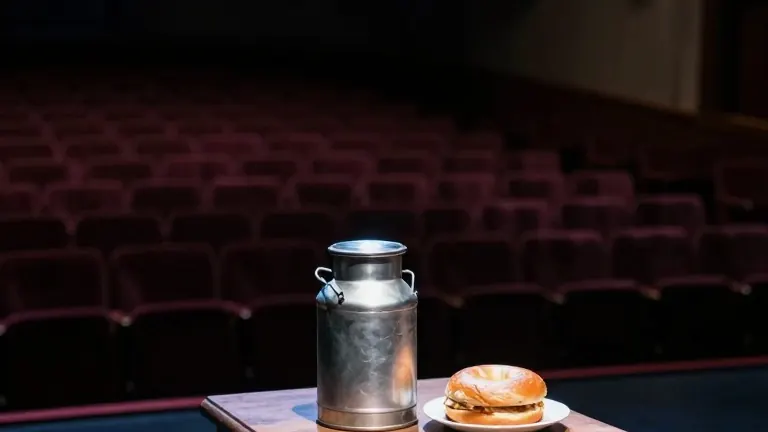
Modern enthusiasts continue to use artifacts from Houdini's career in their own attempts to make contact. John Sherwood, who works at the American Museum of Magic in Marshall, Michigan, uses an aged metal can from Houdini's workshop for séances. Houdini used this can, which featured six Mastodon locks, for a trick where he submerged himself in warm water. Sherwood said some participants have placed a lox and bagel sandwich inside the can, appealing to Houdini's Jewish heritage to invite his spirit to take a bite.
Sherwood is organizing another séance for this Halloween. He believes the 100th anniversary offers a unique opportunity for a manifestation, citing Houdini's love of showmanship. Sherwood noted that the mythology surrounding the magician has grown since his death, fueled by theories that his death certificate was altered or that the wrestler who punched him was a hired killer. These narratives mirror the mystery Houdini cultivated throughout his career.
Source: WUSF Public Media