
Chilean telescope finds potential sixth dwarf planet
Astronomers identified an icy body named 2026 ED138 that orbits 46 times farther from the sun than Earth does.
By Neha Delgado ·
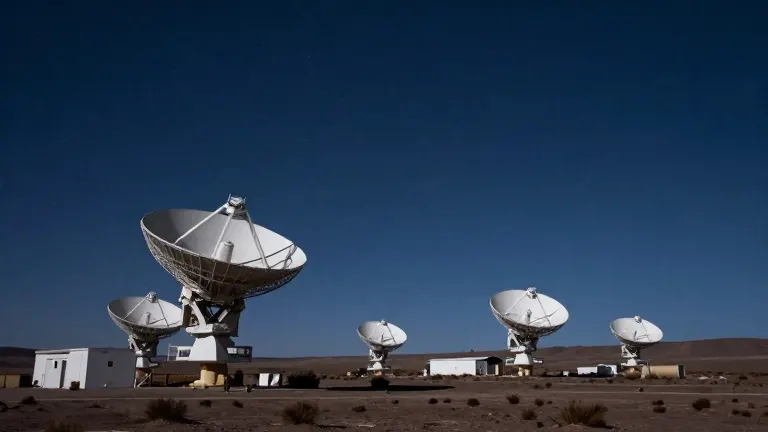
Astronomers have identified a new icy object in the outer solar system that may be the sixth recognized dwarf planet. The candidate, designated 2026 ED138, requires further analysis to confirm its classification. Its discovery was announced at a scientific conference in Spokane, Washington, on October 28, 2026.
Researchers estimate the object’s diameter ranges from 600 to 1,500 kilometers. It orbits the sun at a distance approximately 46 times greater than Earth’s orbital distance. Pluto, the first object classified as a dwarf planet in 2006, orbits at an average distance of about 40 times that of Earth. If confirmed, 2026 ED138 would rank among the largest known dwarf planets.
The object was detected using the Vera C. Rubin Observatory located on Cerro Pachón in central Chile. The telescope is a joint project between the U.S. National Science Foundation and the U.S. Department of Energy. Matt Holman, an astrophysicist at the Center for Astrophysics, Harvard & Smithsonian, was the first to observe the candidate. He noted that the find illustrates that many discoveries remain possible with current telescopes.
The International Astronomical Union currently recognizes five dwarf planets: Ceres, Pluto, Eris, Haumea, and Makemake. Ceres resides in the asteroid belt between Mars and Jupiter, while the other four orbit beyond Neptune. The new candidate lies in the same frigid region as Pluto, an area populated by numerous icy bodies. The IAU reclassified Pluto in 2006 because it did not meet the formal definition of a planet.
To qualify as a dwarf planet, an object must possess sufficient mass for its gravity to pull it into a spherical shape. Current data suggests 2026 ED138 meets this criterion, but verification is needed. Holman explained that the Rubin Observatory measures sunlight reflected from the object. This method creates uncertainty because a small, bright object can appear the same as a large, dim one.
To resolve the ambiguity, scientists plan to use the Atacama Large Millimeter/submillimeter Array, or ALMA, also located in Chile. This instrument detects light emitted by the object itself rather than reflected light. Such observations will provide a clearer measurement of the object’s physical size. Holman stated that establishing the physical size is the primary next step.
Source: CBC News