5,500: The number of biofilters installed in Florida with minimal state testing data
Septi experts warn that wood-chip septic systems may not reduce nitrogen pollution as projected, despite thousands of installations funded by state grants.
By Karan Meyer ·
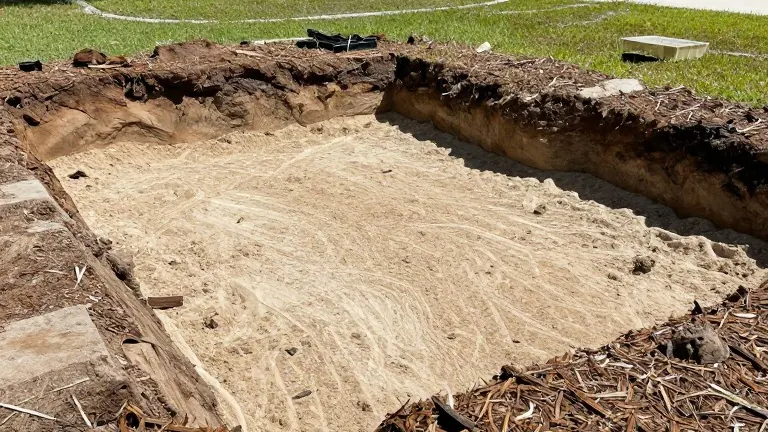
Contractors have installed more than 5,500 biofilter septic systems in Florida yards, industry professionals say, often with limited evidence that the units perform as advertised. These systems use wood chips and sand to convert nitrogen from wastewater into gas, keeping nutrients out of local waterways. The state mandates these advanced options for tens of thousands of properties by 2030, with counties providing grants to cover installation costs.
Damann Anderson, who led the 2009 consulting team hired by the state to design these systems, said initial results were promising but preliminary. He noted that his team intended for the state to refine the technology through further testing before widespread adoption. State records show that regulators approved installation codes before completing pilot sites. By the time state agencies began their own tests, contractors had already been digging units into Florida properties for three years.
The Florida Department of Environmental Protection (FDEP) currently lists five test sites with average nitrogen reductions ranging from 42% to 83%. The agency’s presentations state that more data is required to fully evaluate system performance. FDEP did not respond to inquiries regarding how many biofilters it has monitored or for how long. Anderson said he has not seen enough data to increase his confidence in the technology’s long-term efficacy.
Installation standards do not require specific components from the original design report, such as liners or precise blends of wood chips and sand. Anthony Gaudio, a retired installer and former chair of the Wakulla Springs Alliance, warned that without these parts, some sections of the system may barely trap pollutants. Brian Miller, a third-generation septic contractor in Tallahassee, has installed about 1,000 biofilters in North Florida. He reported that roughly 100 of those systems have failed because rotting wood chips caused the ground to sink, stopping water flow despite passing initial inspections.
Biofilters differ from aerobic treatment units, which are the most popular alternative. Aerobic units require third-party certification, annual maintenance agreements, and electricity that raises homeowner bills by about $20 per month. Biofilters require no routine inspections or monitoring equipment once installed. Independent contractors inspect the system twice during installation, after which it is approved to operate indefinitely without further oversight.
Alachua County offers rebates of $10,000 for biofilters and $16,000 for aerobic systems to residents in two river basins. Stacie Greco, the county’s water resources program manager, said approximately 200 people expressed interest in the program one month after its announcement. On October 28, Governor DeSantis announced more than $10 million in additional grant funding for septic upgrades in five counties, including Alachua, Citrus, Leon, Marion, and Volusia.
Greg Mayfield, president of the Florida Onsite Wastewater Association, said he is skeptical that real-world systems achieve the results previewed in Hazen & Sawyer’s report. He noted that the tested prototypes and field installations are two different things. Miller said the state’s design is set up for failure because the systems lack the monitoring needed to detect when pollution begins to escape.
Source: WUFT