2026: The Year Tesla Cybercab Hits the Market
Tesla has confirmed that its first customer-delivered Cybercab robotaxis will arrive before the calendar year ends, with initial units flowing primarily into its internal fleet.
By Karan Meyer ·
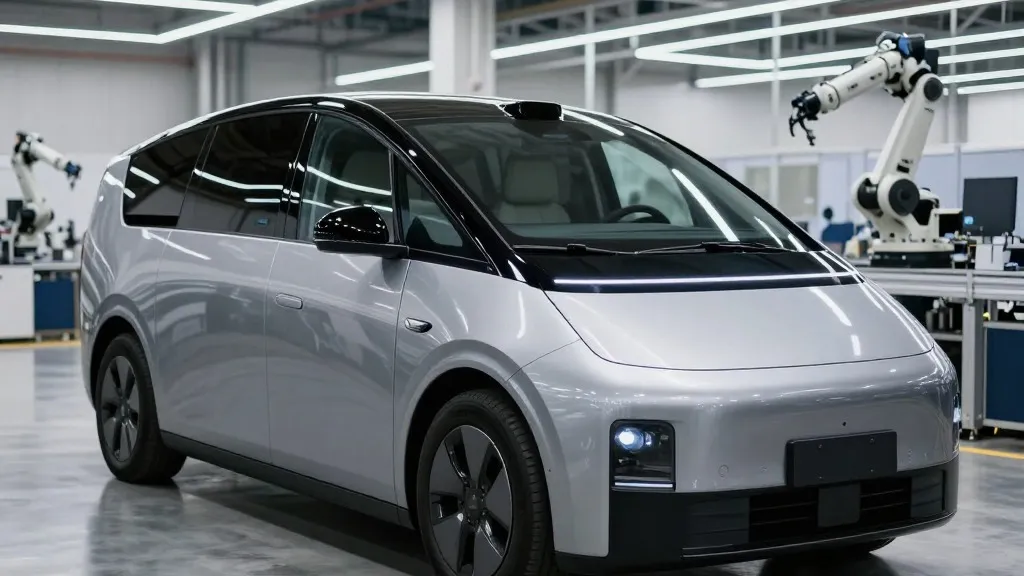
Tesla has officially set a target date for its most ambitious product launch to date, confirming that the first customer deliveries of the Cybercab will occur before the end of 2026. This announcement, made during the company's third-quarter earnings call on October 21, effectively ends months of speculation regarding whether the two-seater robotaxi would be available to the public in the near future or remain an exclusive part of Tesla's internal fleet for years to come.
The timeline was established by Lars Moravy, Tesla’s Vice President of Engineering, who stated that the company is working to get the vehicles into the hands of customers by the close of this year. However, Moravy clarified that the initial rollout will be modest in scale. Production of the Cybercab is currently active on the line at Gigafactory Texas, but every unit rolling off the assembly line is currently being allocated to Tesla’s own internal Robotaxi service rather than being sold directly to private buyers.
This strategy reflects a phased approach to deployment. As operations expand and the company gains operational experience with logistics, ownership models, and fleet management, Tesla intends to mainly deliver fully designed autonomous vehicles to its customer base. The Cybercab will serve as the first of these vehicles to make that transition from internal fleet asset to a product available for external ownership, although the initial number of units sold privately will be small.
CEO Elon Musk reinforced the idea that the Cybercab is not intended to replace traditional personal vehicles like the Model 3, Model Y, or the upcoming Roadster. Instead, he described the vehicle primarily as a "transport-as-a-service" offering. Musk emphasized that the vast majority of Cybercabs will remain Tesla-owned, operating as part of the company's ride-hailing network, while only a limited portion will be available for private purchase.
The Cybercab itself is a distinct departure from Tesla’s previous lineup, featuring a two-seater configuration with no steering wheel or pedals. It relies entirely on Tesla’s Full Self-Driving (FSD) software suite. Production of the vehicle began in February of this year, and early units have been integrated into the Robotaxi service since early September, when the company opened rides to the general public. Tesla has previously indicated that it aims to price the Cybercab at approximately $30,000, a figure significantly lower than its other models.
While the immediate focus is on the Cybercab, Tesla is also moving forward with its broader autonomous driving roadmap. Ashok Elluswamy, the company’s Head of AI, indicated during the same earnings call that unsupervised Full Self-Driving is expected to ship to consumer cars during the second quarter of 2027. This suggests that the Cybercab will be part of a larger ecosystem of autonomous vehicles, but it represents the first dedicated robotaxi hardware to reach customers.
Despite the confirmed timeline, several hurdles remain before widespread delivery. One significant factor is the pace of regulatory agencies, which may lag behind technical readiness. Consequently, early buyers or fleet operators may receive vehicles whose autonomous operation remains geographically restricted. This means that while the hardware will be in customer hands, the range of areas where the car can operate autonomously without a human backup driver may be limited in the initial phase.
The move to sell Cybercabs marks a pivotal moment for Tesla as it transitions from a pure manufacturer of electric vehicles to a mobility service provider with proprietary hardware. By controlling both the vehicle design and the fleet operations, Tesla aims to optimize the cost per mile and the efficiency of its robotaxi network. The decision to keep the majority of the fleet in-house while allowing limited private sales allows the company to maintain strict control over the user experience and data collection during the critical early stages of the service.
As the year draws to a close, attention will turn to how quickly Tesla can ramp up these initial deliveries and manage the logistical challenges of introducing a new, wheelless vehicle to the market. The success of this rollout will likely determine the pace at which Tesla expands the Cybercab program and potentially introduces additional autonomous models in the near future.
Source: Teslarati · original report published