Student List Projects 135 Seats as Vucic Concedes Defeat
Voter turnout hit a 30-year high in Sunday's snap vote, ending Aleksandar Vucic's decade-long grip on Serbian politics.
By Karan Meyer ·
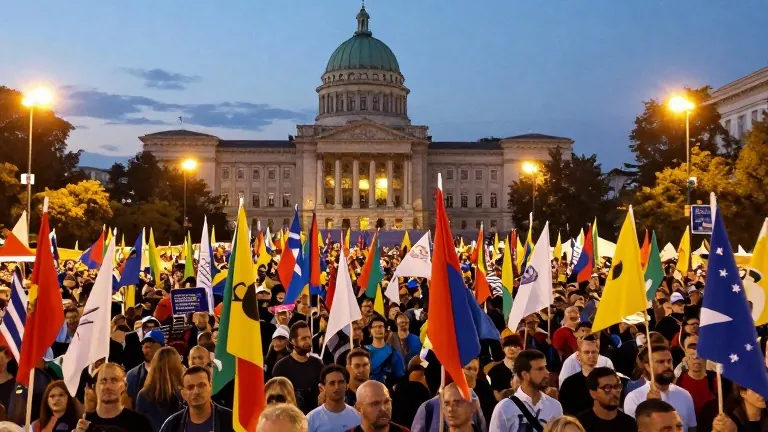
Aleksandar Vucic has lost the snap parliamentary elections held in Serbia this Sunday.
The former president of the Serbian Progressive Party admitted the defeat to his supporters. He stated, "It is clear that we have lost these elections." Exit polls indicated his list would secure 105 seats in the 250-member parliament. The opposition Student List is projected to win between 135 and 140 seats.
Voter participation in the vote reached its highest level in more than three decades. The Student List emerged from a movement that began in November 2024. At that time, 16 people died when a train station canopy collapsed in Novi Sad. Ilija Srdanovic, a professor at the Faculty of Medicine in Novi Sad, led the campaign. The platform pledged to fight corruption and restore citizens' rights. Vucic had previously labeled the demonstrators "blockaders" and accused them of seeking to destabilize the country.
Vucic, born in 1970, entered politics in 1993 with the ultranationalist Serbian Radical Party. He founded the current party, the SNS, with Tomislav Nikolic in 2008. The party took power in 2012. Vucic served as first deputy prime minister until 2014, then as prime minister before becoming president in 2017. He won re-election in 2022 and resigned in September 2026 under pressure from protests. He called the early elections while retaining significant influence over state policy.
Journalist Safeta Bisevac noted that Vucic was initially the less popular figure in the 2008 party split. Bisevac described Vucic as the "essentially the organiser" of the new party. While the economy grew under his leadership, Bisevac said the results were modest. He added that authorities widened their grip on institutions and media during that period. Bisevac observed that Vucic established almost complete control over the state apparatus.
Official data cited by Reuters shows unemployment fell from 26 percent to between 8 and 9 percent. Nominal GDP nearly tripled to about 90 billion euros. Foreign direct investment climbed from roughly 800 million euros in 2012 to a record 5.2 billion euros in 2024. A network of modern motorways was also built. However, rising costs of living and public debt remain central to the debate over his tenure.
Political scientist Dusko Radosavljevic said the students gave voice to the justified anger of citizens. He described the past decade as one of systematic pressure and the destruction of social institutions. Radosavljevic noted that intelligence services spent more time monitoring political opponents. He added that critical thinking was pushed out of public media.
Source: Al Jazeera