Iran Approves $25 Billion Sirik Nuclear Plant as Rosatom Staff Return
The new facility in Hormozgan Province will nearly double Iran's nuclear capacity, while IAEA inspectors report limited access to enrichment sites.
By Karan Meyer ·
The strategic partnership between Russia and Iran has deepened, shifting from diplomatic agreements to heavy industrial commitments.
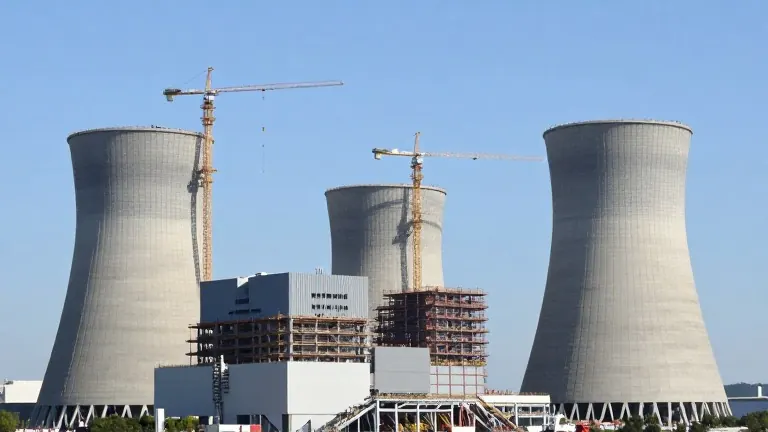
Moscow and Tehran have finalized a $25 billion deal to construct a new nuclear power plant at Sirik in Iran’s southern Hormozgan Province. The facility is located near the Strait of Hormuz and is designed to generate approximately 5 gigawatts of electricity.
This new complex will nearly double the output of the existing Bushehr plant on the southern coast, which is currently under 3 gigawatts in capacity. The Sirik project represents a long-term commitment to Russian technology and fuel supplies, binding the two economies together for decades.
Russian state corporation Rosatom is the primary contractor for both the new Sirik plant and the expansion of the Bushehr site. Despite the start of the US-Iran war in February, which prompted an evacuation of Russian workers, Rosatom reported that 135 engineering and technical specialists had returned to Bushehr by October 11.
Construction at Bushehr is also accelerating. The second reactor unit is more than 60 percent complete, with a target operational date of 2029. A third unit is currently under way. These projects are part of a wider framework established by the Comprehensive Strategic Partnership Treaty that entered into force in October 2025.
Analysts suggest the balance of this relationship favors Moscow. Nikita Smagin, an analyst at the Carnegie Endowment for International Peace, noted in a November 2025 article that the dynamic is shifting in Russia’s favor because Iran is in dire need of investment. Dmitry Kovchegin and Arkady Mil-Man of Israel’s Institute for National Security Studies described Moscow’s approach as a calculated balancing strategy aimed at improving relations with Washington.
The expansion of civilian nuclear infrastructure occurs at a time when international oversight is constrained. A report from the International Atomic Energy Agency published on June 4 stated that inspectors were unable to conduct inspections at four uranium enrichment facilities during the reporting period.
The IAEA could not verify the status of nuclear material at these sensitive sites or confirm whether Iran had suspended enrichment and reprocessing activities as required by UN Security Council resolutions. The agency conducted an inspection at Bushehr from June 1 to 3, but access to other declared sites remained limited.
This gap in monitoring raises questions about the transparency of Iran’s nuclear program. The Arms Control Association stated in a June 2025 analysis that Iran’s enrichment of uranium to 60 percent has no civil justification. This level of enrichment positions Iran to quickly produce weapons-grade material, a concern that grows as Russian technical presence increases.
Western sanctions continue to shape the economic landscape for both nations. Russia faces restrictions on energy, finance, and defense sectors following its invasion of Ukraine in 2022. Iran faces long-standing sanctions over its nuclear program and military activities. The two countries have expanded military contacts and trade channels to mitigate these external pressures, with a 2025 analysis by the Center for Naval Analyses noting increased arms transfers and technical cooperation since 2022.
Source: RFE/RL