
Houthi forces encircle Taiz, cutting off 1.5 million residents
The blockade has severed the city's main supply routes to Aden, causing a 70 percent drop in hospital access and forcing families to pay triple for transport.
By Chloe Phillips ·
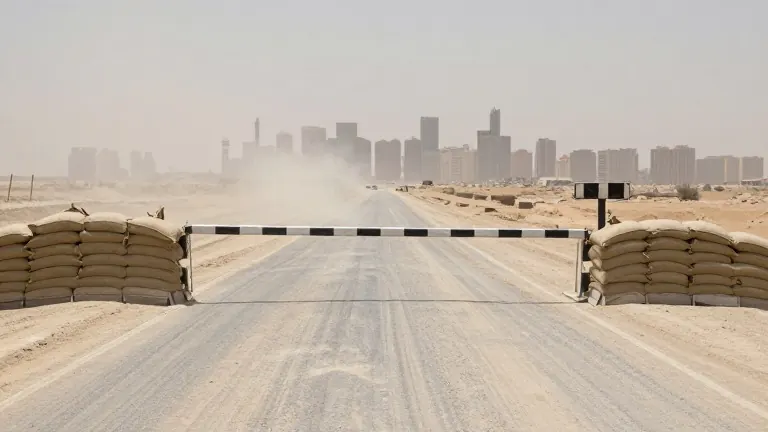
Houthi forces have completed a full encirclement of Taiz, trapping 1.5 million people inside the city and surrounding rural districts. The blockade entered its second month this week, cutting off the primary road connection to Aden and the outside world.
The siege began when Houthi troops captured al-Turbah in the southwestern part of the governorate. This move severed the last open route that remained after the group had surrounded the city from the north, east, and south following their initial advance in 2015. Approximately 180,000 displaced people are also stuck in the fighting zones along the main road between Lahj and Taiz.
Salah Ahmed Ghaleb al-Majidi, the acting director of the governorate's Siege Affairs Department, described the blockade as the most severe imposed on a Yemeni city since the war started in 2014. He noted that food, water, fuel, and medical supplies are no longer reaching the city. Waste is piling up in streets because garbage trucks cannot reach landfill sites located outside the perimeter.
Ahmed al-Mikhlafi, a resident who returned from Mecca with his wife and three children, found the main road closed upon his arrival. His vehicle was stopped at one of nearly 20 new Houthi checkpoints established along the route. The family was ordered to wait in a rural hotel for two days before they could attempt the journey again. The nightly cost for their room was 100 Saudi riyals, or $26.66.
Transport costs have risen sharply due to the new closures. The fare for a shared passenger ride from Aden to Taiz increased from 35 Saudi riyals to 100 Saudi riyals since the blockade began. Taysir al-Samei, an information officer at the governorate's health office, reported that hospital access in the city dropped by 60 to 70 percent by the end of the second week of the siege. Medical staff also face shortages of essential supplies and fuel.
The blockade is also preventing patients from traveling abroad for specialized care. A young journalist identified as T F, who suffers from chronic immune-related inflammation, saw his liver enzyme levels rise to 32 times the normal range. His doctor recommended urgent treatment in Cairo, but he remained in Taiz because his reporting against the Houthis made it difficult to leave through territory controlled by the group.
Source: Al Jazeera