CBA economists predict deep Australian economic slowdown after oil surge
Major banks are cutting growth forecasts to 1% by mid-2027 as the Reserve Bank prepares a fifth rate hike.
By Chloe Phillips ·
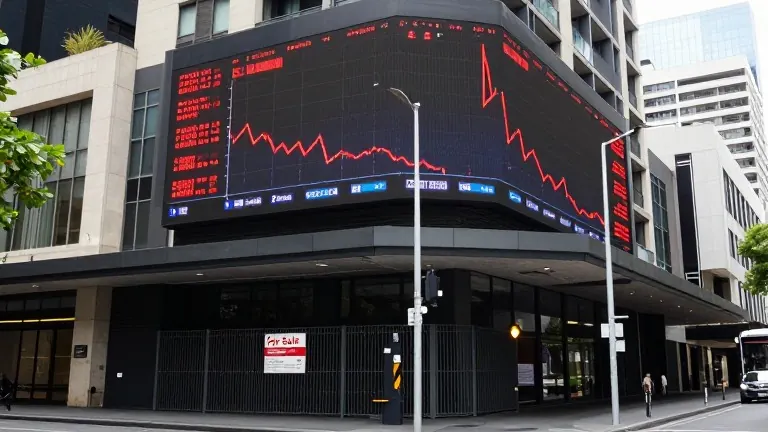
Belinda Allen, head of Australian economics at the Commonwealth Bank, lowered her forecast for real gross domestic product growth to 1% by the middle of next year. This figure is nearly half the previous estimate of 1.8%. Allen cited the extended Middle East conflict, falling house prices, and a more aggressive central bank as primary drivers for the sharper slowdown.
The Reserve Bank of Australia is expected to raise the cash rate for a fifth time on Tuesday. This move would push interest rates to their highest level since 2008. The central bank aims to eliminate persistent inflationary pressures. Analysts warn the economy could tip into recession if the measures prove too severe.
Allen stated she previously expected to see signs of economic recovery by the New Year. She now sees the economy bottoming deeper and later. She attributed the shift in outlook primarily to higher-than-expected oil prices. Most economists anticipated a resolution to the Middle East conflict by now, which would have normalized oil markets.
Brent crude, the global benchmark for oil prices, surged from approximately US$72 a barrel in early July to over US$110 in recent days. The conflict has broadened, and hopes for a near-term peace deal have largely disappeared. This spike in energy costs has forced banks to adjust their long-term projections.
Gareth Spence, head of Australian economics at NAB, also downgraded the bank's forecasts. He noted that unemployment might need to rise higher than initially thought to bring inflation under control. Spence said this view reflects recent comments from senior Reserve Bank officials. The NAB forecast suggests the economy will grow below trend through 2027 and 2028.
Spence projected the unemployment rate would rise from 4.7% to 5.4% by the end of next year. The Commonwealth Bank forecast is slightly more optimistic, with unemployment peaking at 5.1% over the same period. Jim Chalmers, the Finance Minister, warned last month that the December mid-year budget update would reflect a more pessimistic economic outlook.
Shane Oliver, chief economist at AMP, reported that Australia's property slump is tracking to become one of the deepest on record. He estimated home prices could fall by as much as 15% before stabilizing late next year. Sydney property values are already down 10% from their recent peak. Oliver noted that a correction of this size could significantly impact the broader economy.
Oliver explained that worried homeowners are pulling back on spending, a phenomenon known as the wealth effect. A weakening property market will also weigh on homebuilding, adding further pressure to the economy. He stated that while an economic contraction is not his base case, the risk of recession is rising. If the Reserve Bank hikes rates as expected on Tuesday, the chance of recession could reach 45%.
Union leaders protested in front of the Reserve Bank's offices in Sydney on Monday morning. They opposed the anticipated rate hike. Spence said the risk exists that the central bank may need to hike rates again to maintain control over inflation. The multi-year strategy to lower inflation without sacrificing post-pandemic employment gains now appears unlikely to succeed.
Source: The Guardian
More Business · Unethical Practices · Report a business · Got a Story?