Afghanistan: Five Years After the Taliban Ban, Girls Still Cannot Return to School
The interim government maintains that conditions are not yet appropriate for female students, a stance that critics argue allows the regime to expand its ideological control over the education system.
By Karan Meyer ·
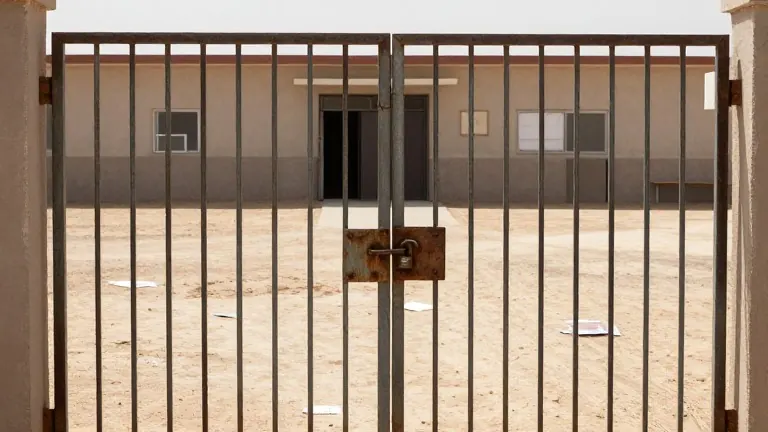
When the Taliban seized power in Afghanistan, they told most female students to stay home. The ruling stated that schools were not ready for them and that the group needed time to prepare appropriate conditions. Five years later, that justification remains the official position. More than 1,800 days after the ban was issued, Taliban officials continue to answer inquiries about female schooling with the same phrase: Now is not the time. The delay has become a central point of contention for international observers and local advocates who argue the wait has served a strategic purpose beyond mere preparation.
The exclusion of female students from in-person instruction is not a new practice for the movement. Leaders in the 1990s pursued a similar blueprint, viewing the subjugation of women and the denial of education as fundamental tools for power and control. Natalie Gonnella-Platts, director of Global Policy at the George W. Bush Institute, notes that this approach is a carbon copy of the group's earlier methods. She argues that the current situation is not a more tolerant iteration of the regime but the same entity operating under the same ideological constraints. The ban stands in contrast to the consensus among historians, Islamic scholars, and leaders of other Muslim-majority nations, who agree that excluding female students from in-person school is not justified.
The impact of the ban extends beyond the classroom. In a country where food insecurity is widespread and children die from preventable illnesses, the withholding of female education removes a key driver of development and stability. From 2001 to 2021, access to schooling helped move Afghanistan forward by building critical thinking and creating livelihoods. The Taliban have since co-opted the country's educational infrastructure to expand their extremist mindset. Madrassas aligned with the group have replaced secular schools in many areas. Unqualified educators now lead classrooms, and corporal punishment is commonplace. The curriculum has shifted to a propaganda-fueled standard that stokes bias against Western values.
International engagement has continued despite the group's internal policies. Taliban ministers frequently appear in photos with international officials during bilateral meetings and high-profile events. In August, diplomatic officials joined Taliban representatives to celebrate the fifth anniversary of the international withdrawal. The event included ornate decor and ice sculptures. Although the global community claims a posture of nonrecognition, national and regional officials have pursued engagement on trade, transportation, immigration, defense, agriculture, education, and sports. These interactions proceed even as female Afghans remain excluded from public engagement in many of these areas.
Gonnella-Platts argues that the lack of consequences for the Taliban's behavior has allowed the group to become more brutal. She points out that most Taliban officials, including cabinet members and Supreme Leader Haibatullah Akhundzada, are not subject to targeted sanctions. Additional tools such as the Global Magnitsky Act have not been universally utilized to pressure those responsible for human rights abuses. She states that U.N. members hosting sanctioned Taliban officials without travel ban exemptions are rarely penalized for their actions. This diplomatic consistency, she argues, requires a shift in policy.
The proposed changes include fully enforcing and strengthening targeted sanctions against Taliban officials. Gonnella-Platts suggests that the Taliban should face designation as a Foreign Terrorist Organization. She also recommends naming the ministries they exploit as primary money laundering concerns under section 311 of the USA Patriot Act. On the ground, brave individuals and organizations continue to support female education through underground or virtual classrooms. These efforts are described as a direct challenge to the Taliban's goals of ideological expansion. The situation requires the global community to prioritize support for female education, a step that Gonnella-Platts defines as smart security policy.
The debate over the ban highlights a conflict between the Taliban's stated cultural and religious justifications and the practical needs of the Afghan population. The group claims that inclusive education is contrary to Afghan culture and Islamic teachings. Critics counter that the exclusion is a draconian attempt to oppress and indoctrinate both women and children. The persistence of the ban five years after its implementation underscores the regime's commitment to its ideological vision. The next steps in international engagement will likely depend on how strictly the global community enforces sanctions and supports alternative educational models.
Source: Las Vegas Sun